Rwenzori Mountains National Park protects one of Africa’s most extraordinary mountain landscapes, rising dramatically along Uganda’s western border with the Democratic Republic of the Congo. Known for centuries as the legendary “Mountains of the Moon,” the Rwenzoris are famous for their snow-capped peaks, enormous glaciers, high-altitude valleys, waterfalls, lakes, forests and unique alpine vegetation.
Unlike volcanic mountains such as Mount Kilimanjaro and Mount Elgon, the Rwenzori range was formed through tectonic uplift. The mountains rise from the floor of the Albertine Rift to more than 5,000 metres above sea level, creating an extraordinary sequence of ecological zones within a relatively small area.
The park covers approximately 996 square kilometres and protects the highest sections of the Rwenzori range. Its landscapes extend from montane forest and bamboo zones through heather-covered slopes and giant vegetation to the Afro-alpine environment surrounding the highest peaks.
The Mountains of the Moon
The Rwenzori Mountains have inspired explorers, geographers, mountaineers and travellers for centuries. Their legendary association with the “Mountains of the Moon” dates back to ancient geographical accounts, when the mountains were associated with the mysterious source of the Nile.
Today, the name remains fitting. Clouds frequently gather around the peaks, mist moves through the valleys and the high-altitude landscape can appear almost otherworldly.
The combination of dramatic rock walls, glaciers, snowfields, alpine vegetation and deep valleys makes the Rwenzoris unlike any other mountain destination in Uganda.
Margherita Peak – The Roof of Uganda
At 5,109 metres above sea level, Margherita Peak on Mount Stanley is the highest point in Uganda and the third-highest mountain peak in Africa.
Reaching the summit is a serious mountaineering undertaking. The ascent passes through several ecological zones before reaching the high alpine environment, where climbers encounter steep rock, ice and snow.
A Margherita expedition requires proper preparation, suitable equipment, experienced guides and sufficient time for acclimatisation. The journey is as much about experiencing the changing mountain environment as it is about reaching the summit.
For experienced mountaineers, standing on Margherita Peak provides one of East Africa’s most memorable high-altitude experiences.
A Mountain Landscape of Extraordinary Diversity
One of the defining features of the Rwenzoris is the dramatic change in vegetation with altitude.
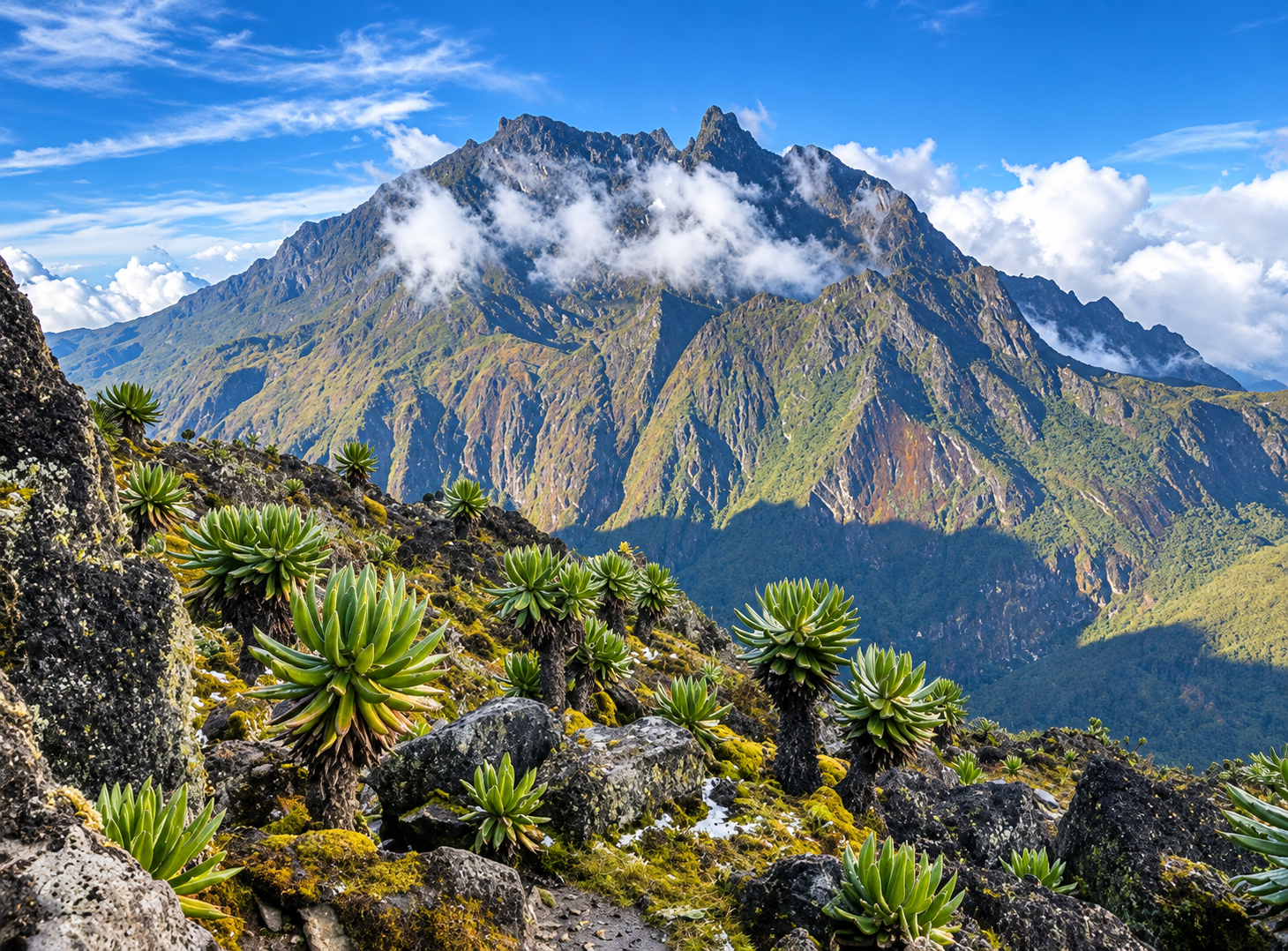
Lower elevations contain montane forests and bamboo, followed by zones of giant heather and open moorland. Higher elevations reveal enormous lobelias, giant groundsels, moss-covered rocks and other specialised Afro-alpine vegetation.
The giant plants of the Rwenzoris are particularly remarkable. Giant lobelias and giant groundsels create a landscape that feels almost prehistoric, while moss and lichen cover rocks and tree trunks in the damp mountain environment.
This exceptional combination of altitude, climate and isolation has produced a unique ecosystem with numerous species of conservation importance.
Forests, Moorlands and Afro-Alpine Zones
The mountain’s ecological zones provide an extraordinary variety of habitats.
Montane forest supports birds, primates and other forest wildlife. Higher elevations transition into bamboo and mixed forest before reaching giant heather and moorland landscapes.
Above the tree line, the environment becomes increasingly alpine. Giant lobelias, groundsels and everlasting flowers dominate the landscape, while streams, bogs and rocky valleys create habitats specially adapted to the cold, wet conditions.
For hikers, this changing vegetation provides one of the greatest rewards of a Rwenzori expedition because every day on the mountain can reveal an entirely different environment.
Wildlife and Birdlife
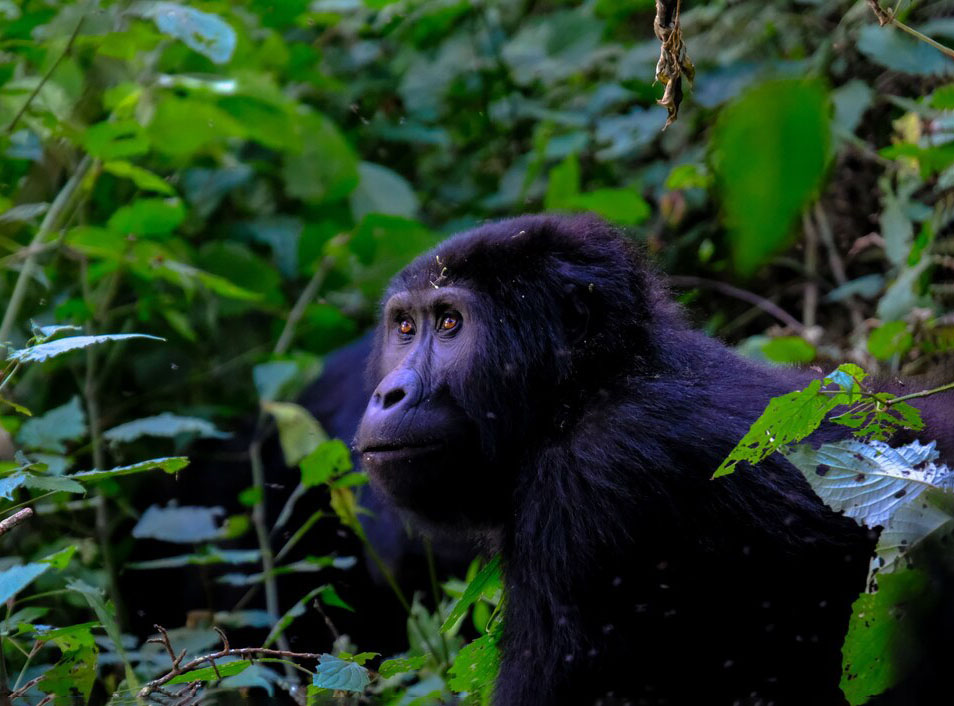
The park protects a rich variety of wildlife across its different elevations. More than 70 mammal species and over 200 bird species are associated with the Rwenzori ecosystem, while the mountain contains numerous Albertine Rift species.
Forest habitats support primates and other mammals, while the higher elevations provide specialised habitats for alpine plants and smaller wildlife.
Birdwatchers can search for species associated with the Albertine Rift and highland forests, while the mountain scenery itself provides spectacular opportunities for nature photography.
Lakes, Rivers and Waterfalls
The Rwenzori Mountains are one of western Uganda’s most important water catchments. Rainfall, mountain streams, wetlands, glaciers and high-altitude lakes combine to feed rivers flowing into the surrounding valleys.
The mountain contains numerous lakes and waterfalls, including spectacular alpine water bodies encountered along trekking routes.
These waterways add to the visual beauty of the landscape while playing an essential ecological role for communities and ecosystems far beyond the park boundary.
A World-Class Hiking and Mountaineering Destination
The Rwenzoris offer trekking experiences ranging from challenging multi-day mountain expeditions to shorter nature and cultural experiences.
The highest-level adventure is the ascent of Margherita Peak, which requires technical mountaineering skills and careful preparation.
Visitors who do not wish to reach the summit can undertake shorter mountain treks and explore lower sections of the range, experiencing forests, bamboo, moorlands, waterfalls and mountain scenery without undertaking a full summit expedition.
The diversity of routes allows the Rwenzoris to appeal to both experienced mountaineers and travellers seeking a more moderate mountain adventure.
Bakonzo Culture and Mountain Communities
The communities surrounding the Rwenzori Mountains have a deep cultural connection with the mountain environment. The Bakonzo are particularly associated with the Rwenzori region, and cultural experiences provide an opportunity to learn about local traditions, livelihoods and relationships with the mountain.
Visitors can combine mountain adventures with village visits, guided community walks, traditional performances, homestead experiences and local food.
These experiences provide a valuable complement to the physical adventure of trekking and help visitors understand the people and communities who live around the Rwenzori landscape.
Conservation and World Heritage
Rwenzori Mountains National Park was gazetted in 1991 and was inscribed as a UNESCO World Heritage Site in 1994 because of its exceptional scenery and biodiversity. UNESCO recognises the park for its dramatic mountain landscapes and the remarkable variety of habitats and species found across its extraordinary altitudinal range.
The Rwenzoris are also an important water catchment for western Uganda and form part of the larger transboundary mountain ecosystem extending toward Virunga National Park in the Democratic Republic of the Congo.
Conservation remains essential because the mountain ecosystem faces pressures including climate change, changes in snow and glacier cover, human population pressure around the park and impacts associated with tourism.
Main Attractions
01
Margherita Peak. At 5,109 metres, Margherita Peak on Mount Stanley is Uganda's highest point and Africa's third-highest mountain peak. It is the ultimate mountaineering objective in the Rwenzoris.
02
Mount Stanley. Mount Stanley contains Margherita Peak and several other high summits and provides some of the most dramatic alpine scenery in the park.
03
Mount Speke. Mount Speke is one of the major massifs of the Rwenzori range and forms part of the spectacular high-altitude mountain landscape.
04
Mount Baker. Mount Baker is another major Rwenzori massif, offering dramatic rock formations, alpine scenery and challenging mountain terrain.
05
Rwenzori Glaciers and Snowfields. The remaining glaciers and snow-covered areas around the highest peaks form one of the most remarkable features of the range, creating an extraordinary alpine environment close to the equator.
06
Giant Lobelias. The enormous lobelias found in the high-altitude zones are among the Rwenzoris' most distinctive plants and contribute to the almost surreal appearance of the alpine landscape.
07
Giant Groundsels and Giant Heather. The mountain's giant groundsels and towering heather vegetation create unusual landscapes found in few other places in Africa.
08
Rwenzori Moorlands. The high moorlands contain bogs, streams, moss-covered rocks and specialised vegetation and form an important transition between the forested lower slopes and the alpine zone.
09
Mountain Lakes. The Rwenzoris contain numerous high-altitude lakes surrounded by dramatic mountain scenery, providing spectacular locations for photography and trekking stops.
10
Waterfalls and Mountain Streams. Waterfalls, streams and rivers are characteristic features of the Rwenzori landscape and reflect the importance of the mountains as a major water catchment.
11
Montane Forest and Bamboo Zones. The lower mountain zones contain dense montane forest and bamboo habitats supporting birds, primates and other wildlife before the landscape transitions into higher-altitude vegetation.
12
Mountains of the Moon Landscape. The combination of snow-capped peaks, cliffs, valleys, forests, moorlands, giant plants, glaciers, lakes and clouds creates the legendary landscape that inspired the name “Mountains of the Moon.”
Things To Do
01
Margherita Peak Summit Expedition. Undertake the challenging ascent of Margherita Peak, Uganda's highest summit. The expedition requires proper preparation, technical equipment, experienced guides and sufficient time for acclimatisation.
02
Multi-Day Rwenzori Trekking. Explore the mountain through multi-day trekking routes that pass through several ecological zones, allowing visitors to experience forests, bamboo, moorlands, giant vegetation and alpine landscapes.
03
Mountain Hiking. Shorter mountain hikes allow visitors to experience the lower and middle elevations without committing to a full summit expedition.
04
Alpine Landscape Exploration. Walk through the extraordinary high-altitude environment and discover giant lobelias, groundsels, heather, moss-covered rocks, mountain streams and other specialised vegetation.
05
Mountain Photography. The Rwenzoris offer exceptional opportunities to photograph snow-capped peaks, glaciers, valleys, waterfalls, forests, giant vegetation, lakes and dramatic cloud formations.
06
Birdwatching. Explore the forest and highland habitats in search of Rwenzori and Albertine Rift bird species, making the mountains an excellent destination for specialist birders and nature enthusiasts.
07
Nature Walks. Guided nature walks through the lower mountain environment provide a gentler way to experience Rwenzori forests, streams, vegetation and wildlife.
08
Forest Exploration. Explore the montane forests and bamboo zones where the landscape supports a variety of birds, primates and other forest wildlife.
09
Waterfall and River Exploration. Discover the streams, waterfalls and mountain waterways that originate from the Rwenzori ecosystem and contribute to western Uganda's important water catchment.
10
Cultural Village Walks. Visit communities around the mountain to learn about local lifestyles, traditional architecture, agriculture and the cultural relationship between the Bakonzo people and the Rwenzori landscape.
11
Bakonzo Cultural Experiences. Experience traditional music, dance, storytelling, local cuisine and community traditions as part of a broader cultural journey around the mountain.
12
Homestead and Community Experiences. Visit local homesteads and community projects to gain a deeper understanding of everyday life around the Rwenzori foothills and the importance of conservation to surrounding communities.
 white-water rafting & adventure safari