Queen Elizabeth National Park is one of Uganda’s most famous and diverse wildlife destinations, located in western Uganda between the Rwenzori Mountains and the great lakes of the Albertine Rift. The park is characterised by sweeping savannah plains, volcanic craters, acacia woodlands, tropical forests, wetlands and the remarkable Kazinga Channel, creating a landscape where wildlife, water and dramatic scenery come together.
Established in 1952 as Kazinga National Park, the park was renamed Queen Elizabeth National Park in 1954 following the visit of Queen Elizabeth II. Today, it is a major safari destination offering a combination of classic wildlife viewing, boat cruises, chimpanzee trekking, birdwatching, cultural experiences and exploration of volcanic landscapes.
Covering approximately 1,978 square kilometres, Queen Elizabeth National Park stretches across the districts of Kasese, Kamwenge, Rubirizi and Rukungiri. Its location also makes it an important link between several protected areas and wildlife habitats in western Uganda.
A Diverse Wildlife Landscape
Queen Elizabeth National Park is home to a remarkable variety of wildlife supported by its different vegetation zones. Savannah grasslands provide open feeding grounds for antelopes and other herbivores, while forests and wetlands create habitat for primates, birds and other species.
The park is known for wildlife including elephants, buffaloes, lions, leopards, Uganda kobs, waterbucks, bushbucks, warthogs, bush pigs, reedbucks and hippopotamuses.
The park is also one of Uganda’s important destinations for seeing four of the Big Five: lion, leopard, elephant and buffalo.
The Famous Tree-Climbing Lions of Ishasha
One of Queen Elizabeth National Park’s most distinctive wildlife experiences is found in the Ishasha sector in the southern part of the park.
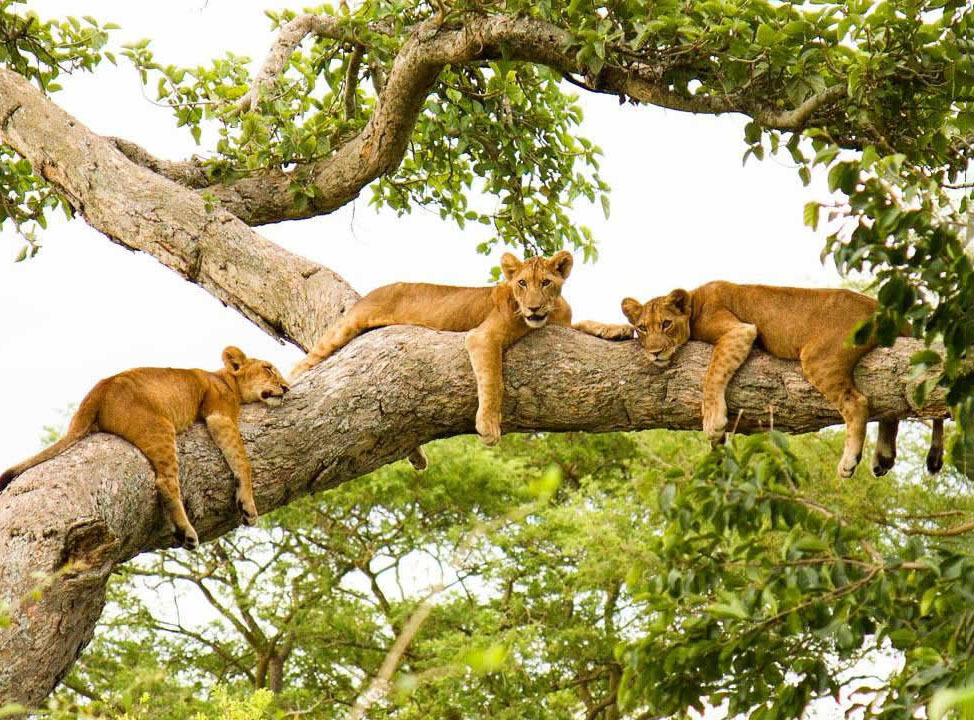
Ishasha is famous for its tree-climbing lions, which are often found resting in the branches of large fig and acacia trees. Seeing a lion elevated above the savannah creates an extraordinary safari moment and is one of the experiences that makes Ishasha particularly memorable.
The reason for this unusual behaviour is not completely understood, although resting above the ground may provide relief from heat and insects while giving the lions a useful vantage point over the surrounding landscape.
The Kazinga Channel
The Kazinga Channel is one of Queen Elizabeth National Park’s defining attractions. It connects Lake George and Lake Edward and supports an extraordinary concentration of wildlife and birdlife.
A boat cruise along the channel provides visitors with a close view of animals gathered along the water. Hippopotamuses are particularly abundant, while elephants, buffaloes, waterbucks and other wildlife can often be seen coming to the water.
The channel is also an excellent birdwatching environment, with numerous waterbirds and other species found along its shores.
Boat Cruises on the Kazinga Channel
A boat cruise is one of the best ways to experience Queen Elizabeth National Park from a different perspective.
As the boat moves along the channel, visitors can watch hippos resting in the water, crocodiles basking on the banks and elephants and buffaloes approaching the shoreline.
Birders can also search for species associated with the channel and surrounding wetlands. The combination of wildlife, water and open scenery makes the cruise particularly rewarding for photographers.
Kyambura Gorge and Chimpanzee Trekking
Kyambura Gorge, located in the eastern part of the park, offers a dramatic contrast to the open savannah.
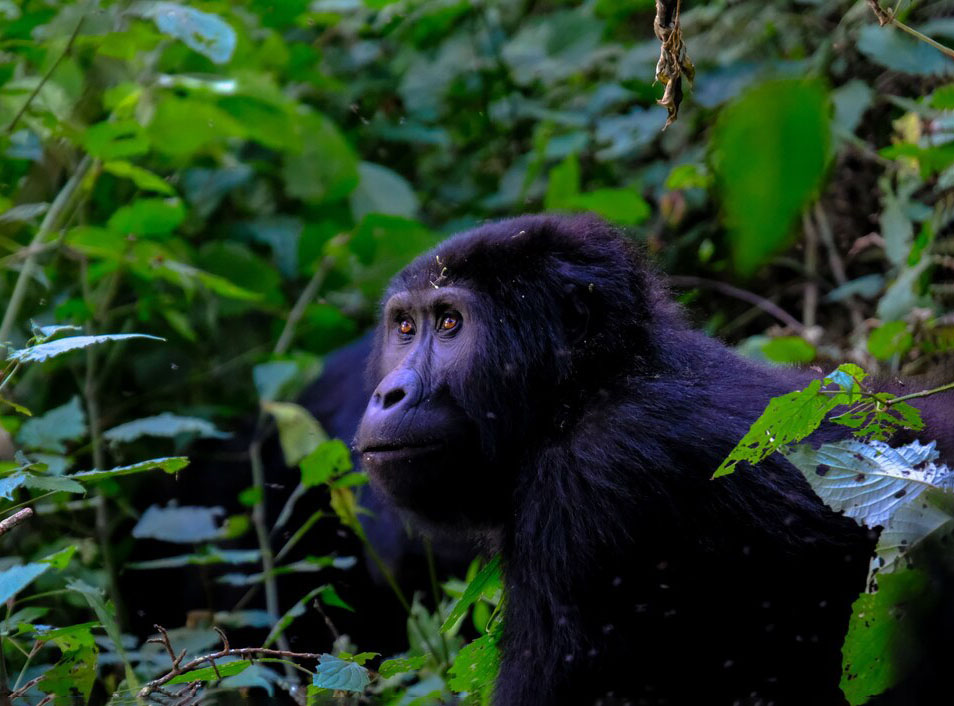
The gorge contains a lush underground forest surrounded by steep valley walls. It is known for its chimpanzee population and provides one of Uganda’s opportunities to track chimpanzees within the Queen Elizabeth Conservation Area.
Chimpanzee trekking involves walking through the forest with trained guides while searching for habituated chimpanzees. Along the way, visitors may encounter other primates such as olive baboons, red-tailed monkeys, black-and-white colobus monkeys and vervet monkeys.
The gorge also supports numerous birds, butterflies and forest plants, making the walk an experience in its own right even beyond the chimpanzee encounter.
Maramagambo Forest
Maramagambo Forest adds another important forest environment to Queen Elizabeth National Park.
The forest provides habitat for several primate species and a variety of forest birds and butterflies. Its trails allow visitors to experience a quieter side of the park away from the open savannah.
The forest is also associated with several lakes and volcanic features, creating scenic environments where visitors can combine wildlife observation with nature exploration.
Birdwatching in Queen Elizabeth
Queen Elizabeth National Park is a major birdwatching destination, with hundreds of recorded bird species across its forests, savannahs, wetlands, lakes and river channels.
The park attracts both resident birds and seasonal migrants, particularly during periods when migratory species are present.
Important birding areas include the Kasenyi plains, Mweya Peninsula, Ishasha sector, Maramagambo Forest, Lake Kikorongo and the wetlands around Lake George and the Kazinga Channel.
Depending on the habitat and season, birders may encounter African fish eagles, kingfishers, herons, storks, raptors, bee-eaters, cranes, papyrus-associated species and other wetland and savannah birds.
Volcanic Craters and Lakes
The volcanic landscape is another defining feature of Queen Elizabeth National Park.
The park contains numerous volcanic craters, crater lakes, cones and other geological formations created by the region’s volcanic history. These features provide spectacular viewpoints and add variety to the wildlife landscape.
Exploring the crater areas allows visitors to experience a quieter side of the park while enjoying views across the surrounding savannah, lakes and distant mountains.
Game Drives
Game drives remain one of the most popular ways to explore Queen Elizabeth National Park.
The established tracks through the Kasenyi plains and other sectors provide opportunities to search for lions, leopards, elephants, buffaloes, Uganda kobs, waterbucks, warthogs and other wildlife.
Morning drives are particularly useful for catching wildlife during cooler hours, while afternoon drives offer opportunities to watch animals becoming active as temperatures begin to fall.
Night wildlife experiences, where available and conducted under appropriate guidance, provide a different perspective by focusing on nocturnal species and predators.
Lion Tracking Experience
Queen Elizabeth National Park also offers a specialised lion tracking experience that provides visitors with an opportunity to learn more about the behaviour and ecology of lions.
Researchers and experienced guides use information from monitored lions to help locate and study them. The experience goes beyond simply seeing a lion, allowing visitors to gain insight into pride structure, movement, territorial behaviour and predator ecology.
Because specialised experiences can have limited participation, advance planning is recommended.
The Mweya Peninsula
The Mweya Peninsula, situated between the Kazinga Channel and Lake Edward, is one of the park’s important tourism centres.
It provides access to game-drive areas, the Kazinga Channel and a variety of birding opportunities. Its position surrounded by water also creates beautiful views across the park and towards the Rwenzori Mountains.
Mweya is also a convenient base for visitors exploring the central part of Queen Elizabeth National Park.
The Queen’s Pavilion
The Queen’s Pavilion is a historic landmark within the park associated with the visit of Queen Elizabeth II.
The site has developed over time and provides visitors with an opportunity to connect the park’s wildlife landscape with its tourism history. It also provides a scenic stopping point for photographs while exploring the central park area.
Photography and Filming
Queen Elizabeth National Park offers exceptional opportunities for wildlife and landscape photography.
The variety of habitats means visitors can photograph large mammals on the savannah, lions in the Ishasha trees, hippos and crocodiles along the Kazinga Channel, birds around wetlands, chimpanzees in Kyambura Gorge and dramatic volcanic landscapes.
Visitors undertaking professional filming or commercial photography should arrange the appropriate permissions and requirements in advance.
Main Attractions
01
Kazinga Channel – A spectacular waterway connecting Lake George and Lake Edward, famous for its concentrations of hippos, Nile crocodiles, elephants, buffaloes and waterbirds.
02
Ishasha Sector and Tree-Climbing Lions – A remote southern sector of the park renowned for lions that frequently rest in the branches of large fig trees.
03
Kyambura Gorge – A dramatic forest-filled gorge offering chimpanzee tracking and opportunities to encounter other primates and forest wildlife.
04
Mweya Peninsula – One of the principal tourism areas of the park, surrounded by spectacular views of the Kazinga Channel and neighbouring landscapes.
05
Crater Lakes and Volcanic Landscapes – Scenic volcanic features, crater lakes and deep depressions provide some of the park’s most distinctive landscapes.
06
Maramagambo Forest – A rich forest ecosystem supporting primates, birds and other wildlife, with guided forest experiences available.
07
Savannah Wildlife Plains – Open grasslands provide excellent habitat for elephants, buffaloes, Uganda kobs, lions, leopards and other wildlife.
08
Birdlife – More than 600 bird species have been recorded, making the park an important destination for bird watchers.
09
Equator Crossing – Queen Elizabeth National Park straddles the Equator, providing a memorable geographical and photographic stop.
10
Queen’s Pavilion – A historic site associated with Queen Elizabeth II’s visit to the area and an interesting stop within the park.
11
Lake Edward and Lake George – The two lakes contribute to the park’s distinctive scenery and support rich aquatic and birdlife ecosystems.
12
Rwenzori Mountain Views – On clear days, the dramatic Rwenzori Mountains provide an impressive backdrop to parts of the park.
Things To Do
01
Game Drives – Explore the park’s savannah tracks in search of elephants, buffaloes, lions, leopards, Uganda kobs, antelope and other wildlife.
02
Night Game Drives – Experience the park after dark and look for nocturnal wildlife and predators that become active during the night.
03
Lion and Predator Tracking – Join a specialised predator-tracking experience focused on lions and other carnivores.
04
Kazinga Channel Boat Cruise – Cruise between Lake George and Lake Edward while observing hippos, crocodiles, elephants, buffaloes and waterbirds along the shoreline.
05
Chimpanzee Tracking – Explore Kyambura Gorge with trained guides in search of habituated chimpanzees and other primates.
06
Chimpanzee Habituation Experience – Spend extended time observing chimpanzees as they become accustomed to human presence, subject to availability and current UWA arrangements.
07
Bird Watching – Search for the park’s remarkable variety of savannah, forest and aquatic bird species.
08
Nature Walks – Explore selected natural areas on foot with guides and experience the smaller details of the park’s ecosystems.
09
Forest Walks – Discover forest environments around areas such as Kyambura and Maramagambo, where primates and forest birds can be encountered.
10
Wildlife Photography and Filming – Capture the park’s wildlife, landscapes, crater lakes, waterways and dramatic scenery.
11
Crater and Scenic Exploration – Visit volcanic features and viewpoints surrounding the park for panoramic landscapes and photography.
12
Cultural Experiences – Connect with communities around the park through local cultural experiences, storytelling, traditional performances and community initiatives.
 white-water rafting & adventure safari