Mount Elgon National Park is a spectacular mountain wilderness in eastern Uganda, centred on the ancient Mount Elgon massif that rises to 4,321 metres above sea level. Straddling the Uganda–Kenya border, Mount Elgon is one of East Africa’s oldest volcanic landscapes and is distinguished by its enormous caldera, extensive moorlands, high-altitude forests, caves, waterfalls and diverse wildlife.
Unlike many African mountains where the summit dominates the experience, Mount Elgon offers a much broader mountain adventure. Its slopes unfold through different ecological zones, from cultivated foothills and montane forests to bamboo, giant heather, moorland and the open high-altitude landscapes surrounding Wagagai Peak.
The Ugandan side of the mountain is protected as Mount Elgon National Park, covering approximately 1,121 square kilometres. The wider Mount Elgon ecosystem extends across the international border into Kenya and is recognised as an important transboundary conservation landscape. UNESCO recognises Mount Elgon as a biosphere reserve, highlighting its exceptional biodiversity, cultural importance and role as a major water catchment.
The Ancient Mount Elgon
Mount Elgon is an extinct shield volcano whose origins date back approximately 24 million years. Over millions of years, erosion has transformed the mountain, leaving behind a vast volcanic landscape rather than the steep cone associated with younger volcanoes.
The mountain has an enormous volcanic base extending across the Uganda–Kenya border. Its summit, Wagagai, reaches 4,321 metres and is located on the Ugandan side.
One of Mount Elgon’s most extraordinary geological features is its vast caldera, covering approximately 40 square kilometres. Reaching the high-altitude interior of this ancient volcanic landscape is one of the defining experiences of a Mount Elgon trek.
A Mountain of Forests, Moorlands and Rare Plants
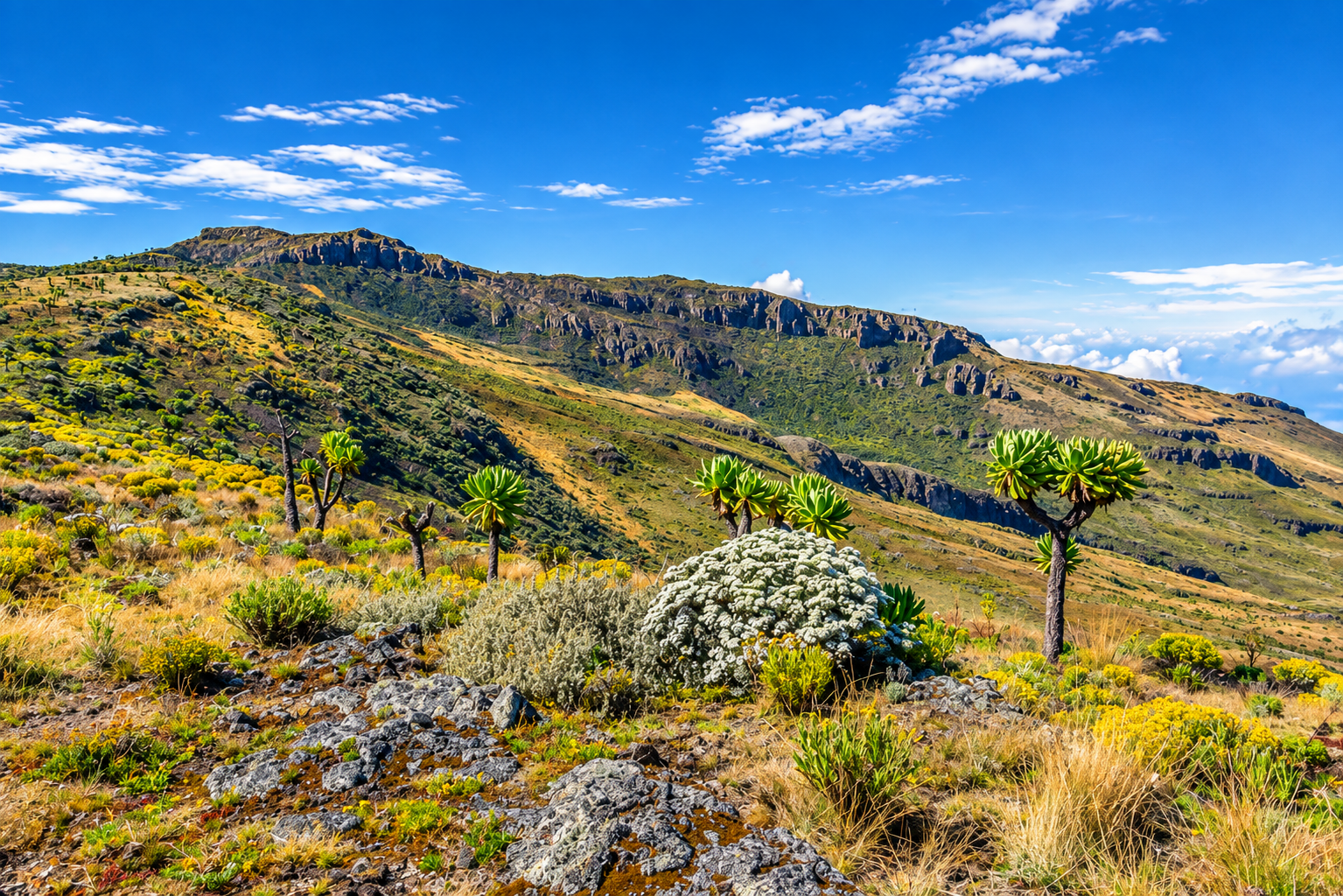
Mount Elgon’s elevation creates a remarkable sequence of vegetation zones.
Lower sections contain forest and woodland, while higher elevations transition into bamboo, giant heather, moorland and alpine vegetation. Giant groundsels and giant lobelias give the upper slopes a distinctive appearance, creating scenery very different from Uganda’s savannah parks.
The high-altitude environment is particularly atmospheric when mist moves across the moorlands and volcanic valleys. Streams, waterfalls and wetlands are scattered throughout the mountain, contributing to Mount Elgon’s importance as a water catchment.
Wagagai Peak and the Great Caldera
At 4,321 metres, Wagagai is the highest point on Mount Elgon and the highest summit within Uganda’s portion of the mountain.
The summit itself is only part of the attraction. Trekkers are drawn into the enormous volcanic landscape surrounding the summit, where broad moorlands, cliffs, valleys and the ancient caldera create an extraordinary sense of scale.
Mount Elgon trekking is therefore less about simply reaching a summit and more about exploring a vast mountain ecosystem over several days.
Mount Elgon Caves
The mountain contains a number of caves, including Kitum, Ngwarisha, Chepnyalil and Makingeny.
Kitum Cave is particularly famous for its large dimensions and mineral-rich walls. The caves form part of Mount Elgon’s geological character and have long been associated with wildlife activity, particularly the movement of elephants into mineral-rich cave environments.
These geological features add another dimension to hiking on Mount Elgon, combining mountain scenery with opportunities to explore ancient volcanic formations.
Wildlife of Mount Elgon
Although Mount Elgon is primarily known as a hiking destination, the national park also supports a variety of wildlife.
Animals associated with the mountain include elephants, buffaloes, bushbucks, giant forest hogs, duikers, waterbuck, bush pigs, hyraxes, monkeys and other forest species. Leopards and other predators are also present, although dense forest and the rugged mountain environment mean that wildlife encounters are generally less predictable than on a conventional savannah game drive.
The mountain’s different habitats create important refuges for both common and specialised species. UNESCO highlights the area’s biodiversity and records wildlife including elephant, buffalo, leopard, hyena, duikers and forest monkeys.
Birdwatching on Mount Elgon
Mount Elgon is an excellent destination for birdwatchers, with more than 300 recorded bird species.
The combination of forest, bamboo, moorland and high-altitude habitats supports a diverse collection of mountain birds. Species associated with the area include Jackson’s francolin, black-collared apalis, white-starred forest robin, alpine chat, Tacazze sunbird, mountain greenbul and other forest and montane specialists.
The endangered lammergeyer is another notable species associated with the Mount Elgon landscape and can sometimes be seen soaring over the mountain and its deep valleys.
Hiking and Multi-Day Trekking
Hiking is the principal tourism experience in Mount Elgon National Park.
Three major routes provide access toward the mountain’s upper reaches: the Sasa Trail, Sipi Trail and Piswa Trail. Multi-day treks generally take several days and allow visitors to experience the gradual transition from lower forests into the dramatic high-altitude landscape.
Camping forms an important part of the mountain experience. Trekkers should be properly equipped for cold temperatures, rain, changing weather and challenging terrain.
Visitors who do not want to undertake a full summit expedition can also arrange shorter hikes around the lower mountain and nearby attractions.
Sipi Falls
Sipi Falls is one of the most popular attractions associated with the Mount Elgon region.
The falls consist of a series of dramatic waterfalls descending along the lower slopes of Mount Elgon near the town of Kapchorwa. Visitors can hike to the main waterfalls, enjoy views across the surrounding countryside and combine the experience with other Mount Elgon activities.
The surrounding landscape is particularly attractive, with green hills, coffee farms, valleys and expansive views across eastern Uganda.
Culture Around Mount Elgon
Mount Elgon is not only a natural landmark but also a culturally important landscape.
The Bagisu, or BaMasaba, have a deep ancestral relationship with the mountain and refer to it as Masaba. The Sabiny communities also have longstanding cultural connections with the mountain and its surrounding highlands.
Visitors can learn about local traditions, agriculture, food, music, dance and community life through responsible cultural experiences.
The famous Imbalu circumcision ceremonies among the Bagisu are an important cultural tradition, while Sabiny communities have their own distinct cultural practices. Cultural tourism should always be experienced respectfully and through locally organised community experiences.
Coffee and the Mount Elgon Landscape
The lower slopes around Mount Elgon are also known for coffee production, particularly Arabica coffee grown in the highland environment.
Coffee experiences around the Mount Elgon region can complement a national park visit, allowing travellers to meet farming communities, learn about cultivation and processing, and understand how agriculture and conservation coexist around the mountain.
A Transboundary Conservation Landscape
Mount Elgon extends across Uganda and Kenya, making conservation cooperation between the two countries particularly important.
The wider ecosystem was formally recognised as a transboundary biosphere reserve, strengthening the focus on coordinated conservation and sustainable development across the international border. UNESCO describes Mount Elgon as a major biodiversity hotspot and water reservoir supporting surrounding communities and ecosystems.
The Ugandan Mount Elgon Transboundary Ecosystem has also been placed on Uganda’s UNESCO World Heritage Tentative List. This is a tentative-list status, not full World Heritage inscription, and reflects the ecosystem’s recognised natural and cultural significance.
Main Attractions
01
Wagagai Peak – The highest point of Mount Elgon at 4,321 metres above sea level, located on the Ugandan side of the mountain.
02
Mount Elgon Crater – A vast volcanic landscape and one of the defining features of the mountain.
03
Sasa Trailhead – One of the principal routes used for multi-day Mount Elgon hikes.
04
Sipi Trailhead – A popular approach to Mount Elgon associated with the spectacular Sipi Falls area.
05
Piswa Trailhead – Another established route for exploring the mountain.
06
Sipi Falls – A dramatic series of cascading waterfalls on the slopes of Mount Elgon.
07
Mount Elgon Caves – Mountain caves containing natural mineral and salt deposits.
08
Montane Forests – Diverse highland habitats supporting plants, birds and wildlife.
09
Highland Wildlife – Buffaloes, forest elephants, bushbucks, giant forest hogs and smaller antelopes.
10
Mount Elgon Birdlife – Around 300 bird species, including a variety of highland and forest birds.
11
Mountain Landscapes and Viewpoints – Panoramic scenery across the mountain slopes and surrounding plains.
12
Bagisu and Sabiny Cultural Heritage – Rich traditions, music, dance and cultural practices of communities living around Mount Elgon.
Things To Do
01
Multi-Day Mountain Hiking – Trek through Mount Elgon’s diverse landscapes on journeys lasting approximately five to six days.
02
Wagagai Peak Trekking – Hike towards the highest point of Mount Elgon.
03
Sasa Route Hiking – Experience one of the principal routes to the mountain.
04
Sipi Route Hiking – Combine mountain scenery with the Sipi Falls landscape.
05
Piswa Route Hiking – Explore another scenic approach to the highlands.
06
Half-Day Mountain Walks – Enjoy shorter excursions without undertaking a full summit trek.
07
Sipi Falls Hiking – Walk between the spectacular Sipi waterfalls and enjoy scenic viewpoints.
08
Birdwatching – Search for highland and forest bird species across the mountain habitats.
09
Nature Walks – Explore forests, vegetation zones and volcanic landscapes on foot.
10
Wildlife Observation – Look for forest elephants, buffaloes, bushbucks, giant forest hogs and other wildlife.
11
Nature Photography – Capture waterfalls, mountain landscapes, forests, wildlife and changing vegetation zones.
12
Cultural Experiences – Discover the traditions, music and cultural heritage of the Bagisu and Sabiny communities.
 white-water rafting & adventure safari