Lake Mburo National Park is a compact but remarkably diverse wildlife destination in western Uganda, located in Kiruhura District approximately 30 kilometres east of Mbarara. Its combination of open savannah, rolling hills, rocky ridges, wetlands, woodlands and lakes makes it one of the most distinctive safari landscapes in the country.
The park forms part of the wider Lake Mburo–Nakivale wetland system, a Ramsar-designated wetland complex, and its proximity to Kampala and Mbarara makes it an excellent addition to a western Uganda safari. It is particularly well suited to travellers looking for a shorter safari experience, walking and cycling opportunities, horseback adventures, boat trips and wildlife viewing in a landscape very different from Uganda’s larger savannah parks.
A Unique Savannah and Wetland Landscape
Lake Mburo covers approximately 370 km² and is characterised by a mixture of savannah grasslands, acacia and woodland habitats, wetlands, rocky hills and lakes.
The park is unusual because of its network of lakes and permanent or seasonal wetlands. Lake Mburo itself is the largest and best known, while several smaller lakes contribute to the broader wetland ecosystem.
Riparian vegetation along the water provides important habitat for hippos, crocodiles, waterbirds and other wildlife, while the surrounding savannah supports zebra, impala, eland, topi, buffalo and other grazing animals.
Wildlife of Lake Mburo
Despite its relatively small size, Lake Mburo supports an impressive range of wildlife.
Visitors may encounter zebra, impala, eland, topi, buffalo, warthog, waterbuck, reedbuck and giraffe, together with predators and smaller carnivores such as leopard, spotted hyena and jackal.
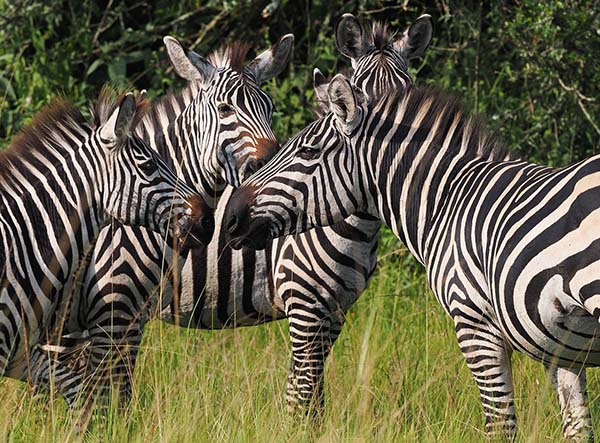
Lake Mburo is especially famous for its large concentrations of zebra and impala. The absence of elephants also gives the park a distinctive ecological character, while the relatively open landscape can provide excellent opportunities for wildlife photography.
The park’s wetlands and lakes add another dimension to wildlife viewing, with hippos and crocodiles commonly encountered around the water.
The Giraffes of Lake Mburo
Giraffes have become one of Lake Mburo’s notable wildlife attractions. Their presence adds variety to the savannah landscape and provides excellent photographic opportunities, particularly when they are encountered against the park’s rolling hills and woodland.
The combination of giraffe, zebra, impala and eland makes Lake Mburo particularly rewarding for visitors interested in Uganda’s antelope diversity.
Night Game Drives
Lake Mburo is one of Uganda’s destinations where night game drives offer a different perspective on the park.
After sunset, nocturnal and crepuscular animals become active while some daytime species settle down. With an experienced guide and appropriate lighting, visitors may have opportunities to encounter leopard, hyena, jackal and other nocturnal wildlife.
Night drives should always be undertaken through the authorised park system and with trained guides.
Walking Safaris
One of Lake Mburo’s greatest advantages is the opportunity to experience the landscape on foot.
Guided nature walks allow visitors to leave the vehicle behind and explore the savannah, woodland and wetland environment at a slower pace. Guides interpret animal tracks, plants, insects, birds and other signs of wildlife while maintaining appropriate safety distances from animals.
Walking provides an especially intimate way to experience the park because visitors can appreciate sounds, smells and smaller details that are easily missed during a vehicle safari.
Horseback Safaris
Horseback riding provides another distinctive way to explore Lake Mburo.
Riding through the savannah can bring visitors close to zebra, impala, eland and other herbivores without the presence of a safari vehicle. It is particularly appealing to travellers looking for an active alternative to conventional game drives.
Horseback experiences should be arranged with established operators and conducted according to wildlife and animal-welfare guidelines.
Cycling Through the Park
Lake Mburo is also known for its cycling opportunities.
Guided bicycle safaris provide a slower and more active way of experiencing the surrounding landscape and can offer close encounters with wildlife and rural scenery. Cycling routes and access conditions vary, so visitors should use authorised guides and follow current park guidance.
Boat Trips on Lake Mburo
A boat cruise on Lake Mburo provides a completely different view of the park.
From the water, visitors can observe hippos resting in the shallows, crocodiles along the shoreline and numerous waterbirds moving between wetlands and open water.
Birdwatchers may encounter cormorants, pelicans, fish eagles and other wetland species, while the quiet movement of the boat allows travellers to appreciate the relationship between the lake and the surrounding savannah.
Birdwatching
Lake Mburo is an excellent birding destination, with a rich mixture of savannah, woodland and wetland species.
Possible sightings include African finfoot, shoebill, southern red bishop, black-bellied bustard, African grey hornbill, green wood hoopoe, crested francolin, red-necked spur fowl and various parrots, kingfishers and raptors.
The wetlands are particularly important for waterbirds, while woodland and grassland habitats provide opportunities to find species associated with drier savannah environments.
Specialist birdwatchers may wish to allow additional time around the lakes, wetlands and Rubanga Forest.
Rubanga Forest
Rubanga Forest provides a contrasting environment within the Lake Mburo landscape.
The forest’s closed canopy, taller vegetation and quieter trails create opportunities for observing forest birds, monkeys and other wildlife. Guided walks through the forest can be combined with visits to nearby savannah and wetland habitats.
For visitors interested in nature rather than only large mammals, Rubanga Forest adds another layer to the Lake Mburo experience.
Salt Licks and Wildlife
Natural salt-lick areas within the park attract wildlife seeking mineral-rich soils.
During a guided nature experience, visitors may encounter groups of animals gathering around these areas. The concentration of wildlife can create excellent opportunities for observation and photography while also revealing an important part of the ecological relationship between the park’s soils, vegetation and herbivores.
Fishing on Lake Mburo
Fishing is permitted at designated locations, with Mazinga being the principal fishing spot associated with Lake Mburo.
The lake supports several fish species, with tilapia among the commonly recognised species. Fishing experiences provide an opportunity to see another side of the park beyond conventional wildlife viewing.
Visitors should use authorised fishing areas and follow current regulations.
The Ankole Cultural Landscape
Lake Mburo is surrounded by communities with deep connections to the pastoral and agricultural traditions of the Ankole region.
The landscapes around the park are strongly associated with cattle keeping, farming and local cultural traditions. Community experiences can introduce visitors to aspects of rural life, food, crafts and traditional livelihoods.
The historical relationship between the park and surrounding pastoral communities is also an important part of understanding Lake Mburo’s conservation story. Rather than viewing the history only through political events, visitors can appreciate the continuing relationship between protected areas, land use and communities in the region.
The Legend of Mburo and Kigarama
The name Lake Mburo is associated with a traditional Ankole story about two brothers, Mburo and Kigarama.
According to the legend, Kigarama had a dream warning that they should move from the valley. While Kigarama followed the warning and moved to higher ground, Mburo remained behind. The valley later flooded, and Mburo was said to have drowned.
The story explains the traditional association between the lake and Mburo, while the surrounding hills are associated with Kigarama. It remains part of the cultural heritage and storytelling traditions connected to the landscape.
Igongo Cultural Centre
Visitors travelling through the Sanga area can combine their Lake Mburo safari with a visit to Igongo Cultural Centre, which offers an introduction to the cultural heritage of western Uganda and the Banyakitara peoples.
The centre provides useful context for understanding the communities, traditions and historical landscapes encountered during a western Uganda journey.
The Equator Experience
Lake Mburo is particularly convenient for travellers following the Kampala–western Uganda route because the Equator crosses Uganda along the journey towards the park.
Visitors can stop at the Equator landmark for photographs and souvenirs before continuing towards Lake Mburo. It provides a popular geographical and photographic stop and can easily be incorporated into a western Uganda itinerary.
Main Attractions
01
Lake Mburo – The park’s central lake, surrounded by wetlands and wildlife-rich habitats, offering opportunities for boat safaris, birdwatching and scenic views.
02
Zebra and Impala – Lake Mburo is one of Uganda’s best destinations for seeing large numbers of zebra and is the country’s key protected area for impala.
03
Rothschild’s Giraffes – Reintroduced giraffes have become one of the park’s most distinctive wildlife attractions.
04
Eland and Topi – The park provides an excellent opportunity to see these large antelope species in its open savannah landscapes.
05
Wetlands and Lakes – The interconnected wetland environment supports hippos, crocodiles, fish and a wide range of aquatic and wetland birds.
06
Shoebill and Wetland Birdlife – The park’s wetlands provide habitat for sought-after species including the shoebill and African finfoot.
07
Rubanga Forest – A forested area offering guided nature walks, birdwatching and a change of scenery from the park’s open savannah.
08
Salt Licks – Wildlife can be observed gathering around natural salt-lick areas within the park.
09
Wildlife and Savannah Landscapes – Open grasslands, woodland, rocky ridges and forested areas create varied habitats for a wide range of animals.
10
Equator Crossing – The Equator crossing on the route toward Lake Mburo provides a popular opportunity for photographs, souvenirs and a memorable stop before or after the safari.
11
Igongo Cultural Centre – Located near Sanga Gate, this cultural attraction offers visitors an opportunity to learn more about the people, traditions and heritage of southwestern Uganda.
12
Ankole Cultural Landscape – The wider region around Lake Mburo offers opportunities to connect the wildlife experience with the history and cultural traditions of the Ankole area.
Things To Do
01
Game Drives – Explore the savannah and woodland in search of zebra, impala, giraffe, eland, buffalo, topi, warthog and other wildlife.
02
Night Game Drives – Experience the park after dark and look for nocturnal wildlife, including opportunities to observe the behaviour of predators such as leopard.
03
Boat Safaris – Cruise across Lake Mburo for close views of hippos, crocodiles and waterbirds along the shoreline.
04
Guided Nature Walks – Explore the park on foot with a trained guide and experience the vegetation, wildlife signs, birdlife and landscapes at a slower pace.
05
Horseback Safaris – Discover Lake Mburo’s wildlife and scenery from horseback for a distinctive and immersive safari experience.
06
Cycling Safaris – Explore selected areas of the park by bicycle while enjoying close views of the savannah landscape and wildlife.
07
Birdwatching – Search for more than 300 recorded bird species across the park’s wetlands, woodland, forest and open grassland habitats.
08
Rubanga Forest Walk – Take a guided walk through the forest to experience its shaded canopy, vegetation and birdlife.
09
Wildlife Photography – Capture zebra herds, antelope, giraffes, birds, wetlands and scenic landscapes in a compact and photogenic safari setting.
10
Fishing – Experience fishing around designated areas such as Mazinga, where Lake Mburo supports a variety of fish species.
11
Cultural Experiences – Combine a safari with visits to nearby cultural attractions and learn more about the traditions and heritage of southwestern Uganda.
12
Equator Experience – Stop at the Equator crossing near the route to Lake Mburo for photographs, souvenirs and a memorable travel experience.
 white-water rafting & adventure safari