Kyambura Wildlife Reserve is one of western Uganda’s most dramatic and atmospheric wildlife destinations, famous for the spectacular Kyambura Gorge and its intimate chimpanzee tracking experience. Located within the wider Queen Elizabeth conservation landscape, the reserve combines open savannah, woodland, wetlands, crater lakes and a remarkable river-carved gorge that creates a striking contrast with the surrounding plains.
The reserve lies near the southeastern side of the Kazinga Channel and the southern shore of Lake George, forming an important wildlife buffer connected to Queen Elizabeth National Park. Its landscape is characterised by small hills, crater lakes, swamps and savannah vegetation, while the Kyambura River provides an important natural boundary and connects the area to the wider Queen Elizabeth ecosystem.
The Dramatic Kyambura Gorge
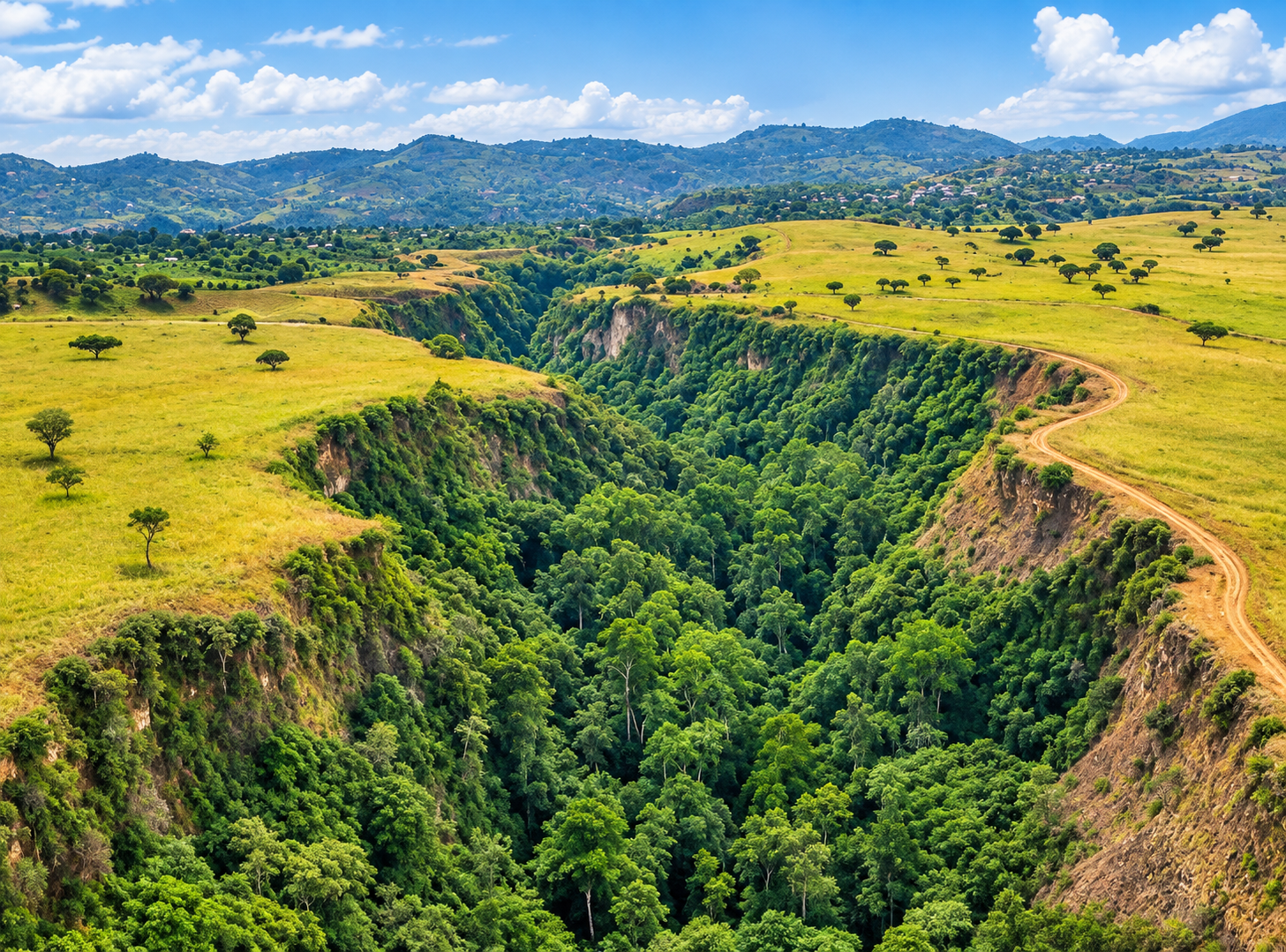
The Kyambura Gorge is the defining attraction of the destination. Carved by the Kyambura River, the gorge cuts dramatically through the surrounding landscape and creates a deeply sheltered environment where forest vegetation contrasts sharply with the open savannah above.
Descending into the gorge reveals a cooler, greener environment filled with trees, vines, dense vegetation and the sound of flowing water. The change from open grassland to forest makes the experience feel like entering a hidden world beneath the surrounding savannah.
The gorge is particularly important for primates and provides the setting for one of Uganda’s most distinctive chimpanzee tracking experiences.
Chimpanzee Tracking
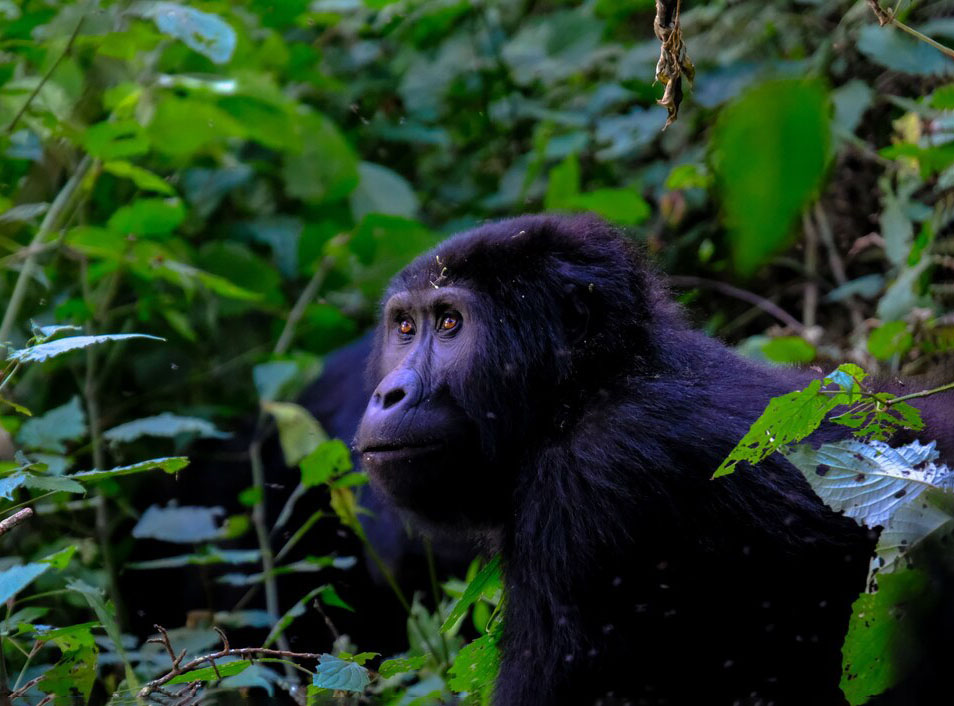
Chimpanzee tracking is the signature activity associated with Kyambura Gorge. The experience takes visitors away from the open savannah and into the forested gorge in search of habituated chimpanzees.
The trek begins with a briefing before visitors descend into the gorge accompanied by trained guides. Once inside the forest, the search may involve following chimpanzee calls, tracks and other signs of movement through the vegetation.
Visitors may encounter chimpanzees feeding, moving through the trees, grooming, resting or communicating with one another. Because chimpanzees are wild animals and move freely through the forest, sightings cannot be guaranteed, but the combination of the primate experience and the dramatic gorge environment makes the trek particularly memorable.
Kyambura is also one of the chimpanzee tracking locations associated with the wider Queen Elizabeth conservation area, giving visitors the opportunity to combine primate experiences with traditional savannah wildlife viewing.
A Rich Primate Environment
Chimpanzees are not the only primates found around Kyambura. The forest and surrounding habitats support several other primate species, creating opportunities for visitors to encounter different monkeys during forest walks and chimpanzee excursions.
Black-and-white colobus monkeys, red-tailed monkeys, vervet monkeys and olive baboons occur within the wider ecosystem. These species occupy different parts of the forest, woodland and savannah habitats and contribute to the ecological diversity of the reserve.
The combination of chimpanzees and other primates makes Kyambura particularly attractive to travellers interested in Uganda’s primate diversity.
Wildlife of the Wider Kyambura Landscape
Kyambura forms part of the broader Queen Elizabeth conservation ecosystem, whose wildlife includes elephants, buffaloes, hippos, lions, leopards and numerous antelope species.
The reserve itself provides a buffer for animals moving out of Queen Elizabeth National Park. Wildlife movements therefore vary depending on water availability, vegetation, season and animal behaviour.
The surrounding savannah and wetlands are particularly valuable for large mammals, while the forested gorge provides a different habitat for primates and forest-associated species.
This combination means that a visit to Kyambura can easily be incorporated into a wider safari itinerary that includes game drives and other wildlife experiences in Queen Elizabeth National Park.
Birdwatching
Kyambura’s combination of forest, river, wetland and savannah habitats creates a varied environment for birdwatching.
Birders can look for forest species within the gorge as well as water-associated and savannah species in the surrounding landscape. The wider Queen Elizabeth ecosystem is also recognised for its diverse birdlife, making Kyambura an excellent addition to a western Uganda birding itinerary.
Birdwatching is particularly rewarding for visitors who combine a forest walk with other birding locations around Queen Elizabeth National Park, the Kazinga Channel and nearby crater lakes.
Crater Lakes and Rift Valley Scenery
The landscape surrounding Kyambura is characterised by numerous crater lakes and rolling hills created by the geological processes of the western Rift Valley.
From elevated viewpoints, visitors can enjoy expansive views across the savannah, crater lakes and surrounding countryside. On clear days, the wider landscape can provide spectacular photographic opportunities, particularly during sunrise and sunset.
The combination of volcanic features, open plains, forested valleys and water bodies gives the Kyambura area a distinctive visual character.
The Kyambura River
The Kyambura River is central to the identity of the reserve. It flows through the wider conservation landscape and forms part of the boundary between Kyambura Wildlife Reserve and Queen Elizabeth National Park before continuing towards the Kazinga Channel.
The river supports wetland and riparian habitats and provides an important source of water for wildlife. Its presence is also closely connected with the formation and ecological character of the Kyambura Gorge.
For photographers and nature enthusiasts, the river adds another layer to the landscape, particularly where water, forest and steep gorge walls come together.
Conservation Importance
Kyambura Wildlife Reserve plays an important role as a buffer for wildlife moving between Queen Elizabeth National Park and surrounding areas. UWA identifies the reserve as contiguous with Queen Elizabeth National Park and notes its importance as a buffer zone for animals moving out of the park.
The reserve also faces conservation pressures, including illegal hunting and fishing and pressure associated with settlement. Responsible tourism and effective conservation management therefore remain important to maintaining the area’s ecological value.
Visitors who explore Kyambura with authorised guides contribute to a tourism model that supports the protection and sustainable use of Uganda’s wildlife areas.
Exploring the Wider Queen Elizabeth Ecosystem
One of Kyambura’s greatest advantages is its location within one of Uganda’s most diverse safari landscapes.
A visit can be combined with game drives across the Queen Elizabeth savannah plains, where visitors may search for elephants, buffaloes, lions, leopards, Uganda kob and other wildlife.
The famous Kazinga Channel provides another major experience, with boat cruises offering close views of hippos, crocodiles, elephants, buffaloes and large numbers of waterbirds.
Other nearby attractions include crater lakes, Katwe Salt Lake and the wider Maramagambo Forest landscape.
This makes Kyambura particularly suitable for travellers who want to combine chimpanzee tracking with a traditional Big Five-style safari experience.
Main Attractions
01
Kyambura Gorge. The spectacular forested gorge is the defining attraction of the reserve. Its steep walls, dense vegetation and riverine environment create a dramatic contrast with the surrounding open savannah.
02
Kyambura River. The Kyambura River flows through the wider conservation landscape and forms part of the boundary between Kyambura Wildlife Reserve and Queen Elizabeth National Park. It provides water and supports riparian and wetland habitats.
03
Chimpanzees. Kyambura is renowned for its habituated chimpanzees and offers one of Uganda’s most distinctive chimpanzee tracking experiences, combining primate encounters with the dramatic setting of the gorge.
04
The Underground Forest. The forest inside the gorge creates a completely different environment from the savannah above. Dense vegetation, tall trees, vines and shaded trails provide habitat for primates, birds and other forest wildlife.
05
Primate Diversity, Chimpanzees share the wider Kyambura forest environment with several other primates, including red-tailed monkeys, black-and-white colobus monkeys, vervet monkeys and olive baboons.
06
Savannah Wildlife. The open habitats surrounding the gorge form part of a larger ecosystem supporting elephants, buffaloes, hippos, lions, leopards and several antelope species.
07
Crater Lakes. The Kyambura area is surrounded by crater lakes created by the geological processes of the western Rift Valley. These lakes add spectacular scenery and provide excellent opportunities for photography and scenic exploration.
08
Albertine Rift Landscape. Kyambura lies within the Albertine Rift landscape, where escarpments, valleys, crater lakes, forests and savannah create some of western Uganda’s most dramatic scenery.
09
Wetlands and Swamps. Wetlands around the reserve provide important habitats for aquatic wildlife and waterbirds and contribute to the ecological connection between the gorge, river and wider Queen Elizabeth landscape.
10
Birdlife. The mixture of forest, riverine vegetation, wetlands and savannah creates varied habitats for birds. Forest specialists, waterbirds and savannah species can all be encountered around the wider Kyambura landscape.
11
Queen Elizabeth Conservation Landscape. Kyambura is contiguous with Queen Elizabeth National Park and forms part of a much larger conservation system. This allows visitors to combine the gorge with game drives, boat safaris and other protected-area experiences.
12
Rift Valley Scenic Views. The elevated areas around Kyambura provide beautiful views over crater lakes, rolling savannah and the surrounding western Uganda landscape, making the destination especially rewarding for photographers.
Things To Do
01
Chimpanzee Tracking, The signature experience at Kyambura. Visitors descend into the gorge with trained guides to search for habituated chimpanzees and observe their natural behaviour when conditions allow.
02
Guided Gorge Walks. Explore the dramatic gorge on foot while learning about its vegetation, geology, river system and wildlife. The changing landscape from savannah rim to forest floor makes the walk particularly memorable.
03
Forest Nature Walks. Walk through the dense vegetation of the gorge and surrounding forest habitats while searching for primates, birds, butterflies and other smaller wildlife.
04
Primate Watching. Look for chimpanzees, black-and-white colobus monkeys, red-tailed monkeys, vervet monkeys and olive baboons in the forest and surrounding habitats.
05
Birdwatching. Explore the forest, riverine and savannah habitats in search of forest birds, waterbirds and other species associated with the wider Queen Elizabeth ecosystem.
06
Wildlife Observation. Observe wildlife moving between the reserve and the wider Queen Elizabeth conservation landscape. Depending on season and animal movements, visitors may encounter elephants, buffaloes, hippos, antelope and other wildlife.
07
Nature Photography. The gorge offers excellent opportunities for photographing forest vegetation, primates, birds, river landscapes, crater lakes and the dramatic transition between forest and savannah.
08
Wildlife Photography. Visitors can combine the forest experience with wildlife photography in the surrounding Queen Elizabeth ecosystem, particularly during game drives.
09
Crater Lake Exploration. Explore the crater-lake landscape around Kyambura for scenic viewpoints, photography and an appreciation of the geological character of western Uganda.
10
Queen Elizabeth Game Drives. Combine Kyambura with game drives across Queen Elizabeth National Park to search for elephants, buffaloes, lions, leopards, Uganda kob and other savannah wildlife.
11
Kazinga Channel Boat Cruise. Add a boat cruise along the Kazinga Channel to experience one of Uganda’s finest water-based wildlife activities, with opportunities to see hippos, crocodiles, elephants, buffaloes and abundant waterbirds.
12
Katwe Salt Lake and Community Exploration.Visit the Katwe area to learn about traditional salt production and the relationship between local communities and the natural resources of the Queen Elizabeth landscape.
 white-water rafting & adventure safari