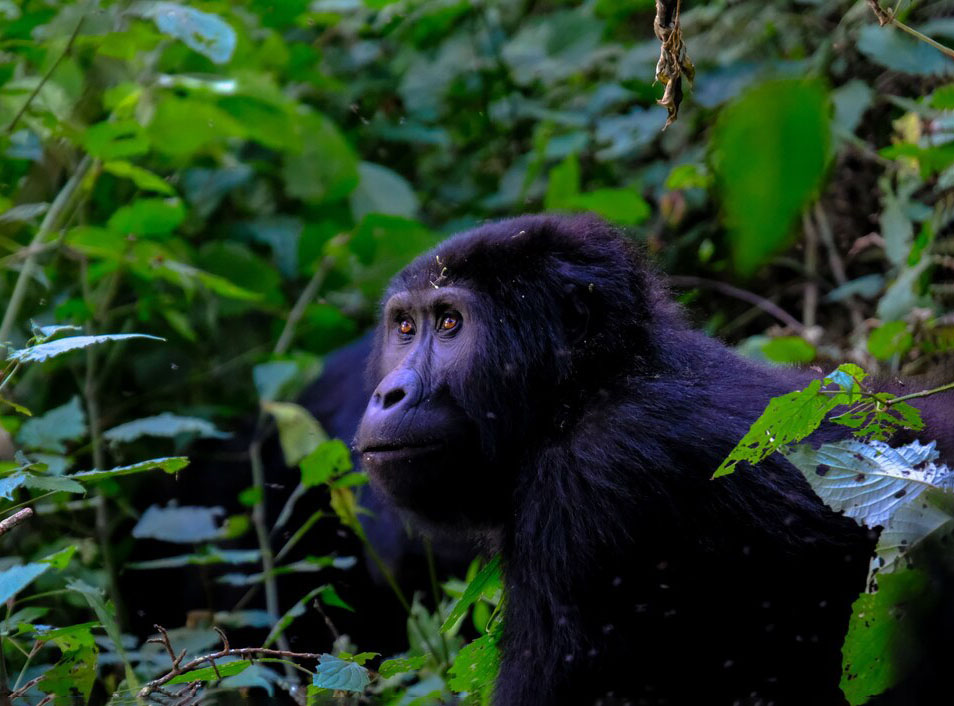
Kibale Forest National Park is one of Uganda’s most remarkable rainforest destinations and a premier place to encounter chimpanzees and other primates in their natural environment. Located in western Uganda, the park covers approximately 795 km² of tropical forest and forms an important ecological connection with Queen Elizabeth National Park.
Often associated with Uganda’s primate safaris, Kibale combines dense evergreen forest, diverse wildlife, exceptional birdlife, crater-lake scenery and community experiences. Its forests provide habitat for chimpanzees and numerous other primates, while the surrounding landscapes offer opportunities to explore wetlands, tea-growing areas, crater lakes and local cultural heritage.
Uganda’s Primate Capital
Kibale is renowned for having one of Africa’s highest concentrations and diversities of primates. The park supports 13 recognized primate species, making it one of the most rewarding destinations in Uganda for visitors interested in primate encounters.
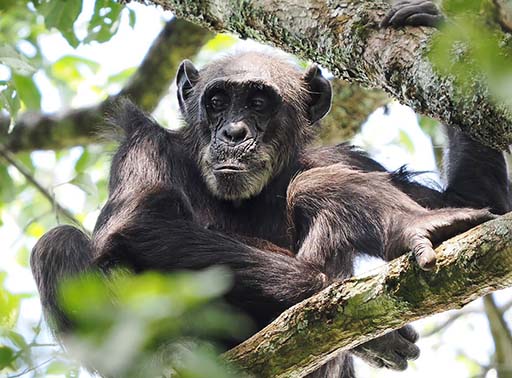
Chimpanzees are the park’s headline attraction. Kibale is one of the best places in Uganda to observe habituated chimpanzee communities in their natural forest habitat. Watching them move through the canopy and forest floor, communicate with one another, feed and interact within their social groups provides an intimate wildlife experience.
Other primates include red colobus monkeys, black-and-white colobus monkeys, L’Hoest’s monkeys, blue monkeys, red-tailed monkeys, grey-cheeked mangabeys, olive baboons, bushbabies and potto.
Chimpanzee Tracking
Chimpanzee tracking is Kibale’s most famous tourism experience. Visitors enter the forest with trained guides and rangers to search for habituated chimpanzee communities.
The experience is not simply about finding the animals. Along the way, visitors learn about the forest ecosystem, chimpanzee behaviour, feeding patterns, communication and social relationships.
Once the chimpanzees are located, visitors can observe them in their natural environment for the permitted viewing period. The experience can involve following the chimpanzees through dense vegetation as they move between feeding and resting areas, creating a dynamic and memorable encounter.
Chimpanzee Habituation
For visitors who want a more immersive experience, chimpanzee habituation provides an opportunity to spend substantially more time observing chimpanzees as they become accustomed to human presence.
The experience involves accompanying researchers, guides and trackers through the forest and following chimpanzee movements over an extended period. It offers a deeper opportunity to understand their behaviour, communication, feeding habits and social interactions.
Because the chimpanzees remain active and can move considerable distances through the forest, habituation can be physically demanding as well as highly rewarding.
A Rich Tropical Forest
Kibale’s dense forest is one of its defining attractions. Evergreen and semi-deciduous vegetation creates a complex habitat of tall trees, vines, shrubs and shaded forest floors.
The forest contains a wide variety of tree species, including important timber species, while the understory supports numerous shrubs, herbs and other plant life.
The forest also forms part of a larger ecological landscape extending towards Queen Elizabeth National Park. This connection allows wildlife to move between different habitats and contributes to the conservation importance of the wider ecosystem.
Wildlife Beyond the Primates
Although primates are the main attraction, Kibale supports a broader range of wildlife.
Visitors may encounter forest elephants, buffaloes, bushbucks, duikers, bush pigs, giant forest hogs and warthogs. Carnivores include leopards, servals, African golden cats and several mongoose species, although many of these forest animals are elusive and sightings are less predictable.
The park also supports reptiles, butterflies and other smaller forest species that become particularly interesting during guided nature walks.
Exceptional Birdlife
Kibale is also an important birding destination. Its forest habitats support hundreds of recorded bird species, including Albertine Rift-associated species and specialist forest birds.
Among the birds associated with the park are black-capped apalis, blue-headed sunbird, collared apalis, red-faced woodland warbler, dusky crimsonwing, purple-breasted sunbird, blue-breasted kingfisher, yellow-spotted nicator, green-breasted pitta, African pitta, black bee-eater, crowned eagle, olive long-tailed cuckoo, western tinkerbird and grey parrot.
The forest environment makes birdwatching especially rewarding for visitors interested in species that are difficult to find in more open habitats.
Bigodi Wetland Sanctuary
Just outside Kibale, Bigodi Wetland Sanctuary provides an excellent complement to a forest safari. The community-managed wetland is known for its birdlife, primates, butterflies and diverse vegetation.
Visitors can explore the wetland on guided walks while learning about local conservation and the role tourism plays in supporting surrounding communities.
The sanctuary also offers opportunities to encounter several primate species and a variety of wetland and forest birds.
Kihingami Wetland and Sebitoli
The northern part of the Kibale landscape provides additional opportunities for nature and community experiences.
Kihingami Wetland is associated with birdwatching, nature walks and visits to the surrounding tea-growing landscape. The Sebitoli area also provides opportunities to explore the forest and observe primates, birds, butterflies and other wildlife.
These experiences offer a different perspective on Kibale beyond the central chimpanzee-tracking area.
Forest Walks and Night Experiences
Guided forest walks allow visitors to slow down and experience Kibale’s ecosystem beyond the search for chimpanzees. Guides can introduce visitors to trees, plants, insects, birds, primates and signs of larger mammals.
Night experiences provide another dimension to the forest. Nocturnal species such as bushbabies and potto become active after dark, while visitors may hear or encounter other creatures that remain hidden during daylight.
Crater Lakes
The countryside surrounding Kibale is dotted with volcanic crater lakes, creating some of western Uganda’s most attractive landscapes.
Lakes such as Nyabikere, Nkuruba, Nyinambuga and other crater features are associated with the broader Fort Portal and Kasenda crater-lake region. These landscapes provide opportunities for scenic drives, walking, photography and community experiences.
Visitors should always follow local guidance regarding whether a particular crater lake is suitable for swimming or other water activities, as conditions vary between individual lakes.
Amabere Ga Nyina Mwiru
Amabere Ga Nyina Mwiru is an important cultural and geological attraction near Fort Portal. The limestone formations are associated with a traditional Batooro story concerning Nyina Mwiru, whose father is said to have ordered her breasts to be cut off after she refused a marriage arranged for her.
The formations and the story together provide an opportunity to explore the relationship between landscape, oral tradition and Batooro cultural heritage. A visit can be combined with crater-lake exploration and other experiences around Fort Portal.
Bakiga and Batooro Communities
The communities surrounding Kibale add an important cultural dimension to a visit. Batooro and Bakiga communities have long-standing connections with the landscape, and community-based experiences can introduce visitors to local livelihoods, traditions, food, farming and everyday life.
Responsible cultural tourism provides an opportunity for visitors to learn directly from local communities while contributing to livelihoods around the conservation area.
A Complete Western Uganda Experience
Kibale works particularly well as part of a wider western Uganda safari. Chimpanzee tracking can be combined with Bigodi Wetland Sanctuary, crater-lake exploration, cultural experiences and visits around Fort Portal.
The park can also form part of a longer itinerary linking Kibale with Queen Elizabeth National Park, where visitors can transition from rainforest primate experiences to savannah wildlife and the Kazinga Channel.
The Spirit of Kibale
Kibale Forest National Park offers far more than a chimpanzee encounter. It is a living rainforest filled with primates, birds, trees, butterflies and elusive forest mammals, surrounded by wetlands, crater lakes, farms and communities.
For travellers seeking a combination of wildlife, nature, culture and immersive forest experiences, Kibale is one of Uganda’s most rewarding destinations. Its chimpanzee encounters provide the headline experience, while the surrounding forest and communities ensure there is much more to discover beyond the main trail.
Main Attractions
01
Chimpanzees. Kibale's habituated chimpanzee communities are the park's signature attraction and one of Uganda's most rewarding wildlife experiences.
02
Kanyanchu Primate Experience. The Kanyanchu area is the principal tourism hub for chimpanzee tracking and primate experiences within the park.
03
Primate Diversity. Kibale is renowned for its concentration of primates, including red colobus, black-and-white colobus, L'Hoest's monkeys, blue monkeys, red-tailed monkeys and grey-cheeked mangabeys.
04
Ancient Tropical Forest. The extensive evergreen forest provides a spectacular setting for wildlife viewing, photography, hiking and ecological exploration.
05
Albertine Rift Birdlife. The forest supports a rich bird community that includes several species associated with the Albertine Rift.
06
Bigodi Wetland Sanctuary. This community-managed wetland outside the park is an excellent destination for birdwatching, primate viewing, nature walks and community tourism.
07
Sebitoli Forest. The northern tourism area provides opportunities for guided forest experiences and wildlife observation.
08
Kihingami Wetland. A community-focused wetland area near Sebitoli offering birdwatching, nature experiences and visits connected with the surrounding tea-growing landscape.
09
Crater Lakes. The wider Kibale landscape is surrounded by scenic volcanic crater lakes that provide opportunities for hiking, sightseeing and exploration.
10
Amabere Ga Nyina Mwiru. A culturally significant natural attraction associated with a traditional Batooro story and distinctive limestone formations.
11
Forest Wildlife. The park supports elephants, buffaloes, giant forest hogs, bushbucks, duikers, warthogs and several smaller carnivores.
12
Tea and Rural Landscapes. The areas surrounding Kibale combine tropical forest with tea plantations, wetlands, crater lakes and rural communities, creating a distinctive western Ugandan landscape.
Things To Do
01
Chimpanzee Trekking. Track habituated chimpanzees through Kibale's rainforest with trained guides and experience these intelligent primates in their natural environment.
02
Chimpanzee Habituation Experience. Spend an extended period following chimpanzees and observing their behaviour as they become accustomed to human presence.
03
Primate Watching. Search the forest canopy and undergrowth for Kibale's remarkable variety of monkeys and other primates.
04
Birdwatching. Explore the forest and surrounding wetlands in search of colourful forest birds and Albertine Rift species.
05
Guided Forest Walks. Walk through Kibale's rainforest while learning about its trees, plants, wildlife and ecological systems.
06
Night Forest Walks. Explore the forest after dark in search of nocturnal wildlife including bushbabies, potto and other night-active species.
07
Bigodi Wetland Walk. Discover a community-managed wetland known for birdlife, primates, butterflies and rich vegetation.
08
Sebitoli Forest Walks. Explore the northern forest area and look for primates, birds, butterflies and other wildlife.
09
Kihingami Wetland Experience. Combine birdwatching and nature walks with visits to the wetland and surrounding tea-growing landscape.
10
Crater Lake Exploration. Explore the scenic crater lakes surrounding Kibale through walking, sightseeing and nature experiences.
11
Cultural Encounters. Meet local communities, learn about Batooro traditions and discover the relationship between people, forests and wetlands.
12
Visit Amabere Ga Nyina Mwiru. Explore the natural formations and traditional history surrounding this important cultural attraction near Fort Portal.
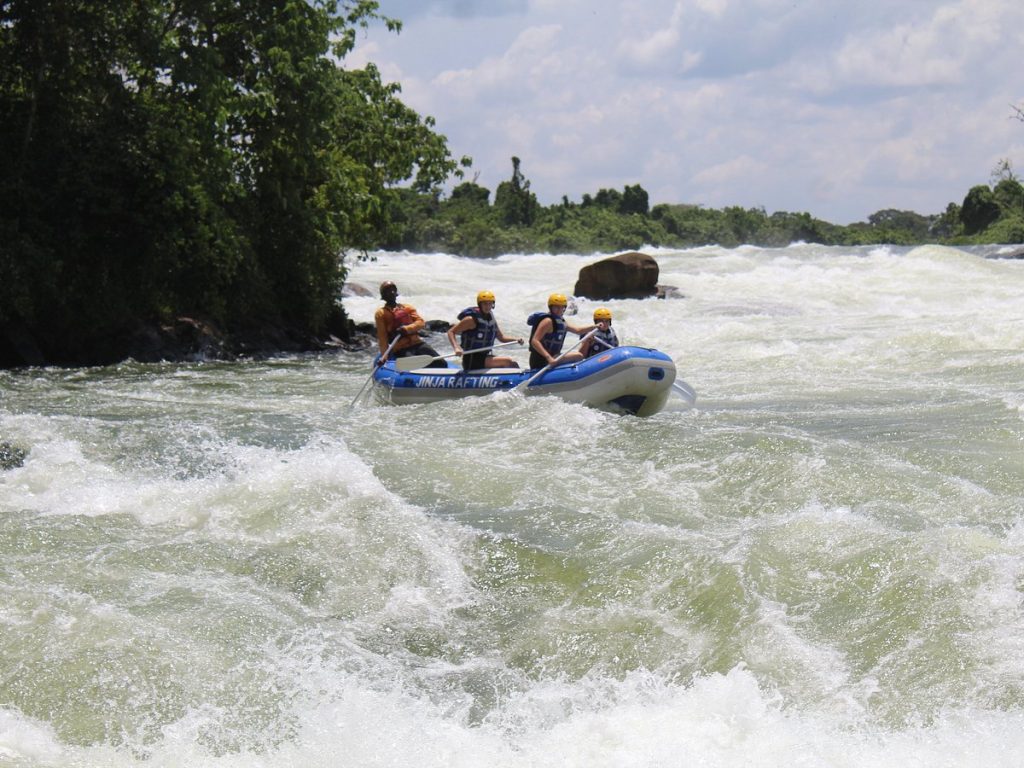 white-water rafting & adventure safari