Echuya Central Forest Reserve lies in the highlands of southwestern Uganda between the Kabale and Kisoro areas, forming an important forest and wetland landscape within the Albertine Rift. At elevations of roughly 2,270 to 2,570 metres above sea level, the reserve is characterised by dense bamboo, montane forest and the distinctive Muchuya wetland.
Its location makes Echuya particularly attractive to travellers exploring the southwestern Uganda circuit. The reserve lies close to Lake Bunyonyi, Mgahinga Gorilla National Park and Bwindi Impenetrable National Park, allowing visitors to combine highland forest experiences and specialist birdwatching with gorilla trekking, scenic lake excursions and other attractions in the region.
Echuya is especially valuable for bird enthusiasts. The forest and wetland habitats support a range of Albertine Rift and highland bird species, including the globally endangered Grauer’s Swamp-warbler. Other notable species associated with the area include Rwenzori Apalis, Collared Apalis, Archer’s Robin-Chat, Red-throated Alethe, Kivu Ground Thrush, Red-faced Woodland Warbler, Rwenzori Hill Babbler, Rwenzori Turaco, Doherty’s Bushshrike and Regal Sunbird.
A Remarkable Albertine Rift Landscape
The reserve forms part of the biologically important Albertine Rift, a region recognised for its exceptional concentration of endemic species. Its high elevation creates a cool, misty environment where bamboo forests, montane vegetation, swamp habitats and surrounding highland landscapes come together.
One of Echuya’s most distinctive features is the Muchuya swamp, a high-altitude wetland surrounded by forest and bamboo. The swamp provides habitat for specialised wetland and forest species and is particularly important for birdwatchers searching for Grauer’s Swamp-warbler and other highland birds.
The combination of dense forest, bamboo and wetland habitat gives Echuya a character that is quite different from Uganda’s lower-elevation savannah parks and even from the larger montane forests of Bwindi and Mgahinga.
A Special Destination for Birdwatching
Birding is one of the strongest reasons to visit Echuya. UWA monitoring has documented the reserve as an important habitat for forest and wetland birds, with species of conservation concern including Grauer’s Swamp-warbler, Rwenzori Batis, Doherty’s Bushshrike, Regal Sunbird, Eastern Mountain Greenbul and Red-faced Woodland Warbler.
The dense vegetation means that many birds are easier to locate by their calls than by sight. An experienced local birding guide can therefore make a major difference, particularly when searching for shy forest specialists.
Among the species associated with the Echuya landscape are:
- Grauer’s Swamp-warbler
- Rwenzori Apalis
- Collared Apalis
- Archer’s Robin-Chat
- Red-throated Alethe
- Kivu Ground Thrush
- Red-faced Woodland Warbler
- Rwenzori Hill Babbler
- Rwenzori Turaco
- Doherty’s Bushshrike
- Regal Sunbird
- Blue-headed Sunbird
- White-eyed Slaty Flycatcher
- Cinnamon Bracken-Warbler
- Mountain Yellow Warbler
For serious birders, Echuya offers the opportunity to explore a specialised highland habitat where forest, bamboo and wetland species occur together.
Muchuya Swamp
Muchuya Swamp is one of the defining features of the Echuya landscape. The high-altitude wetland creates an important ecological contrast with the surrounding bamboo and montane forest.
Its open and wet habitats provide opportunities to look for specialised birds while also offering a different perspective on the reserve’s highland environment. Giant lobelias, grasses, sedges and other wetland vegetation contribute to the distinctive scenery.
For photographers and nature enthusiasts, the combination of mist, wetland vegetation and surrounding forest can create some of the most atmospheric landscapes in southwestern Uganda.
Bamboo and Montane Forest
Dense bamboo is one of Echuya’s most recognisable characteristics. The bamboo forest provides habitat and movement corridors for forest wildlife while also supporting the livelihoods and traditional practices of neighbouring communities.
Beyond bamboo, the reserve contains montane forest vegetation that contributes to the wider Albertine Rift ecosystem. Walking through these habitats offers a quieter forest experience compared with Uganda’s better-known tourist destinations.
The cool temperatures, frequent mist and dense vegetation give Echuya a distinctly highland atmosphere.
Forest Wildlife
Although Echuya is particularly known for its birds, the forest also supports a variety of mammals and primates.
Visitors may encounter:
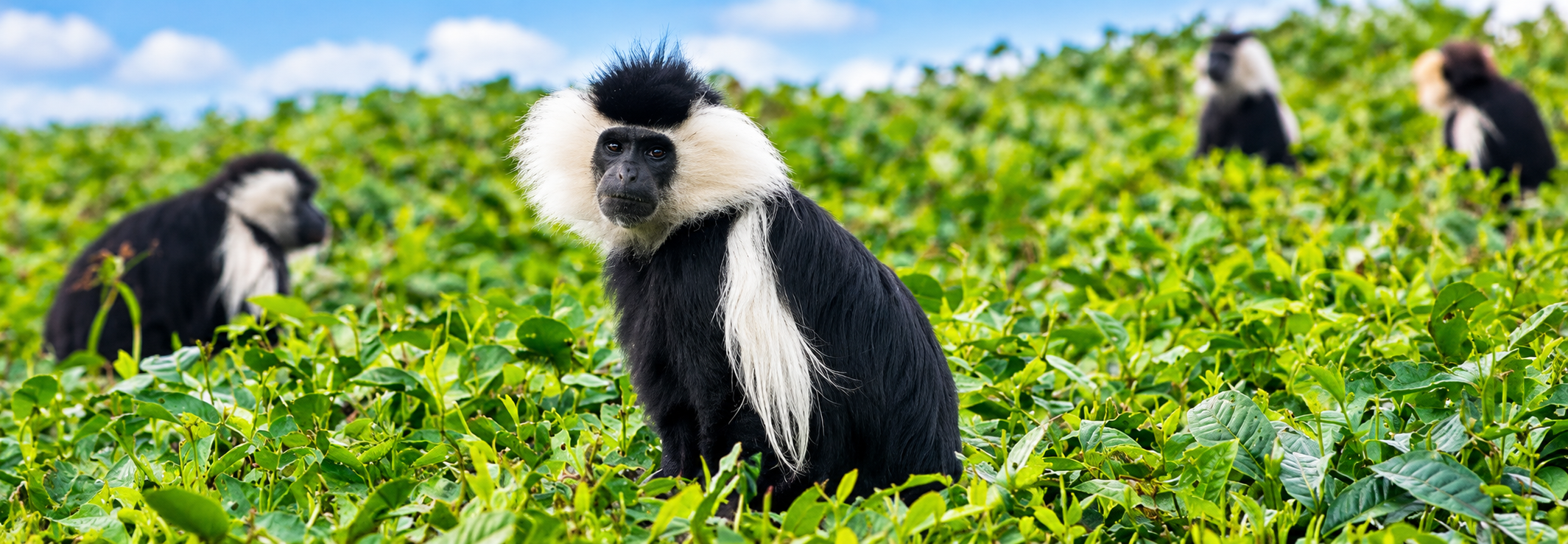
- Black-and-white colobus monkeys
- Blue monkeys
- Olive baboons
- L’Hoest’s monkeys
- Forest-dwelling small mammals
- Various rodents and shrews
- Other species associated with the montane forest ecosystem
The reserve is also scientifically important for specialised Albertine Rift small mammals, including species associated with montane and swamp habitats.
Wildlife encounters here are generally more intimate and forest-based than the large-herd safari experiences found in Uganda’s savannah parks.
Butterflies and Other Invertebrates
Echuya’s biodiversity extends well beyond birds and mammals. The forest supports numerous butterfly species as well as a diverse moth population.
Colourful swallowtails, Charaxes and other forest butterflies can be encountered along forest edges and trails, while the surrounding vegetation provides important habitat for pollinators and other insects.
For photographers interested in macro subjects, these smaller forms of wildlife add another dimension to an Echuya visit.
Cultural Connections and the Batwa
The forests of southwestern Uganda have deep cultural importance for Batwa communities whose history and traditional knowledge are closely connected to the forest landscape.
Cultural experiences around the Echuya area can introduce visitors to traditional knowledge, music, storytelling, crafts, forest-resource use and other aspects of Batwa heritage.
These experiences should be approached respectfully and in partnership with local communities. Cultural tourism can provide opportunities for community income while helping visitors better understand the history and traditions associated with the region.
Activities at Echuya
Echuya is best suited to travellers who enjoy quiet nature experiences, specialist birding and highland forest exploration.
Early morning birdwatching is particularly rewarding because many forest species are most active and vocal during the cooler hours of the day. Guided walks can also reveal primates, butterflies, plants and other smaller details that are easy to miss when travelling through the forest independently.
The reserve’s location also makes it possible to incorporate Echuya into a wider southwestern Uganda itinerary.
A visitor could combine an Echuya birding experience with:
- Gorilla trekking in Mgahinga Gorilla National Park
- Gorilla trekking in Bwindi Impenetrable National Park
- A scenic stay around Lake Bunyonyi
- Highland exploration around Kabale and Kisoro
- Wildlife viewing in Queen Elizabeth National Park
- Other Albertine Rift birding locations
Conservation and the Future of Echuya
Echuya remains an important conservation landscape, but it also faces pressures associated with surrounding human populations and the use of forest resources.
Historical conservation concerns have included forest-edge encroachment, agricultural expansion, firewood collection, charcoal production, pressure on bamboo resources and habitat fragmentation.
The future of Echuya is closely connected to stronger conservation management and meaningful relationships with surrounding communities.
Uganda’s 2026 State of Wildlife Resources report identifies Echuya Central Forest Reserve among the areas proposed for elevation to National Park status. The report indicates that the proposed change is part of a broader process to strengthen Uganda’s protected-area system and remains subject to the necessary approval process.
This makes Echuya an especially interesting destination to watch as Uganda continues to develop its protected-area network.
Main Attractions
01
Muchuya Swamp – A high-altitude wetland and one of Echuya’s most important habitats for specialised bird species.
02
Bamboo Forests – Dense highland bamboo stands forming a defining feature of the park’s landscape.
03
Albertine Rift Endemic Birds – Rare and specialised bird species found within the Albertine Rift mountain ecosystem.
04
Grauer’s Swamp Warbler – A globally endangered wetland bird and one of Echuya’s most sought-after species.
05
Rwenzori Turaco – A spectacular highland forest bird prized by birdwatchers and photographers.
06
Rwenzori Apalis and Collared Apalis – Small forest birds associated with Echuya’s montane habitats.
07
Kivu Ground Thrush – A secretive forest-floor species that rewards patient birdwatchers.
08
Archer’s Robin-Chat – A distinctive forest bird known for its melodious calls.
09
Montane Forest Wildlife – Primates and other wildlife inhabiting Echuya’s high-altitude forests.
10
Butterfly Diversity – More than 53 recorded butterfly species contribute to the park’s rich biodiversity.
11
Highland Forest Landscapes – Misty forests, bamboo groves, giant lobelias and mountain scenery.
12
Batwa Cultural Heritage – Traditional knowledge, crafts, music, storytelling and forest-related cultural experiences.
Things To Do
01
Guided Birdwatching – Search for Albertine Rift endemics and specialised highland forest birds.
02
Grauer’s Swamp Warbler Search – Explore the Muchuya swamp habitat in search of this rare species.
03
Forest Walks – Walk through bamboo and montane forest habitats with knowledgeable guides.
04
Nature Hiking – Explore the park’s high-altitude landscapes and changing vegetation.
05
Muchuya Swamp Exploration – Discover the distinctive wetland environment and its specialised vegetation.
06
Primate Watching – Look for black-and-white colobus, blue monkeys, L’Hoest’s monkeys and olive baboons.
07
Butterfly Watching – Observe the park’s diverse butterfly species along forest trails and clearings.
08
Botanical Exploration – Discover montane plants, bamboo, giant lobelias and other highland vegetation.
09
Wildlife Photography – Capture rare birds, primates, butterflies, forest landscapes and misty mountain scenery.
10
Batwa Cultural Experience – Learn about traditional forest knowledge, crafts and cultural heritage.
11
Traditional Music and Storytelling – Experience community performances and cultural traditions.
12
Combination Safari Excursions – Combine Echuya with nearby Lake Bunyonyi, Mgahinga or Bwindi.
 white-water rafting & adventure safari