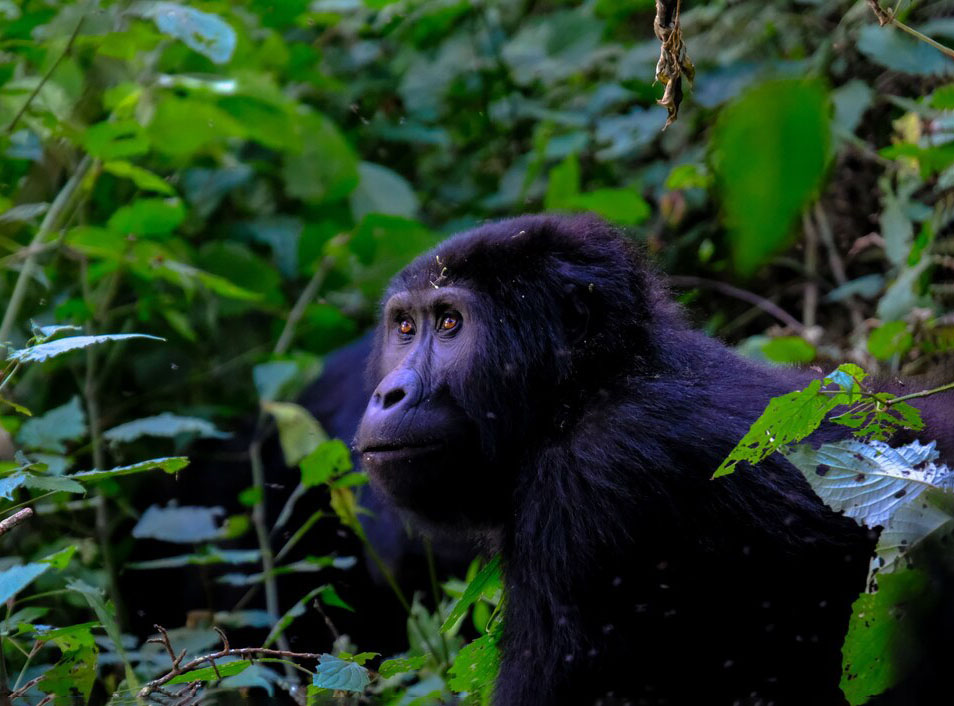
Toro Semliki Wildlife Reserve is one of western Uganda’s most distinctive wilderness areas, occupying 542 square kilometres in the dramatic Albertine Rift Valley between the Rwenzori Mountains, the Kijura Escarpment and Lake Albert.
Established as a game reserve in 1926, Toro Semliki was among Uganda’s earliest protected areas. Its original purpose was to protect the large populations of Uganda kob that occupied the area. Today, the reserve protects a remarkable mosaic of open savannah, acacia-combretum woodland, Borassus palm stands, riverine forests and wetlands.
Its relatively quiet character makes Toro Semliki particularly appealing to travellers who prefer less crowded safari experiences. Rather than large concentrations of safari vehicles, visitors can explore a spacious landscape where wildlife viewing is combined with birdwatching, primate walks, scenic drives, cultural experiences and exploration of the Lake Albert region.
A Dramatic Albertine Rift Landscape
Toro Semliki lies within one of western Uganda’s most striking landscapes.
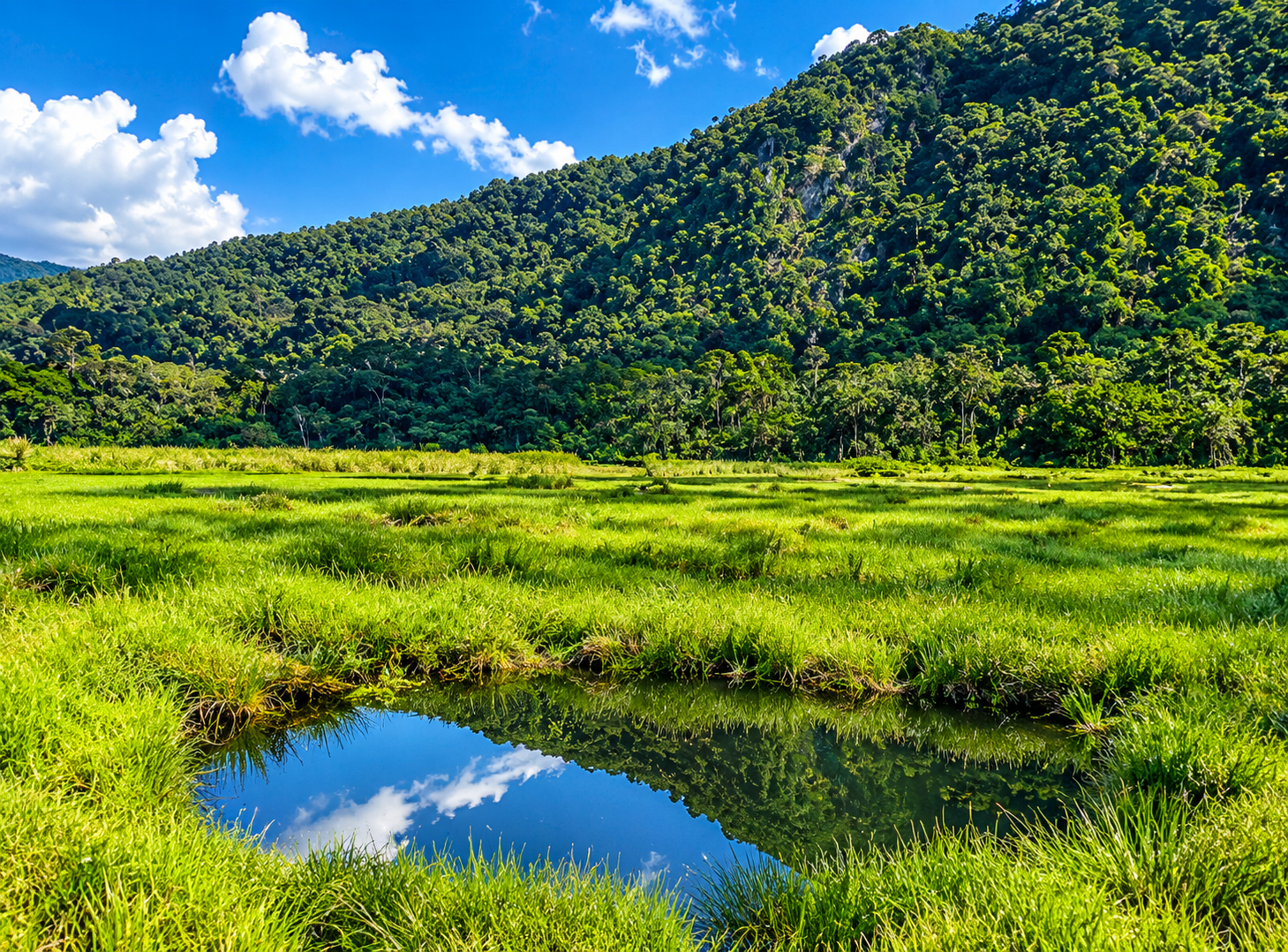
The reserve stretches across the floor of the Albertine Rift Valley, with the Rwenzori Mountains rising to the southwest, the Kijura Escarpment forming the eastern boundary and Lake Albert extending towards the west.
On clear days, the landscape becomes particularly spectacular. The steep Rift Valley escarpment rises dramatically above the surrounding plains, while the Blue Mountains of the Democratic Republic of Congo form a distant backdrop across Lake Albert. The glacial peaks of the Rwenzori Mountains can also be visible to the southwest.
This combination of savannah, woodland, wetlands, mountains, escarpments and lake scenery gives Toro Semliki a character that is very different from Uganda’s more familiar savannah parks.
Savannah, Woodland and Riverine Forest
The reserve contains a fascinating mixture of habitats.
Open acacia-combretum woodland and grassy savannah dominate much of the landscape, while stands of Borassus palms create distinctive silhouettes across the plains.
The Wasa and Mugiri rivers and their tributaries support belts of riverine forest, where tall trees create important habitat for primates, birds and other wildlife. As the landscape moves away from permanent water sources, the vegetation gradually becomes more open, eventually transitioning into grassland and woodland.
The result is a mosaic of habitats that supports a wide range of wildlife within a relatively compact protected area.
Wildlife of Toro Semliki
Toro Semliki is home to many of the species associated with Uganda’s western savannah landscapes.
Wildlife recorded in the reserve includes elephants, buffaloes, Uganda kob, waterbuck, warthogs, giant forest hogs and hippopotamuses. Primates include chimpanzees, baboons, vervet monkeys, red-tailed monkeys and black-and-white colobus monkeys.
One of the reserve’s distinctive wildlife features is its elephant population. UWA describes the population as including both savannah and forest elephants, together with hybrid forms resulting from interbreeding.
Wildlife encounters can be quieter and less predictable than in Uganda’s more intensively visited safari destinations, making patience and careful observation an important part of the experience.
Primates and Chimpanzees
Toro Semliki is particularly interesting for primate enthusiasts.
Chimpanzees in the reserve live in a relatively dry environment compared with the forests of Kibale, Budongo and Kyambura. Their behaviour and movement patterns therefore provide an important opportunity for research and conservation.
Researchers have studied chimpanzees in the Mugiri riverine forest near Semliki Safari Lodge, and visitors undertaking primate walks may have an opportunity to encounter chimpanzees as well as other primates.
The reserve’s primate experience is different from a conventional chimpanzee trek in a highly habituated forest. Sightings are not guaranteed, and the experience is as much about understanding the ecosystem and observing wildlife behaviour as it is about finding chimpanzees.
Birdwatching in Toro Semliki
Birdwatching is one of the strongest reasons to visit Toro Semliki Wildlife Reserve.
UWA currently lists approximately 440 bird species in the reserve, with the combination of savannah, woodland, riverine forest, wetlands and Lake Albert creating a diverse range of habitats.
Birders can look for species such as the red-necked falcon, black-billed barbet, Abyssinian ground-hornbill and a variety of woodland and wetland species.
Lake Albert and its surrounding wetlands add another dimension to the birding experience, with the shoebill among the most sought-after species.
The reserve can also complement a visit to nearby Semuliki National Park, where Central African forest species add another layer to a western Uganda birding itinerary.
Lake Albert and the Wetlands
Although Lake Albert lies outside the reserve itself, its proximity strongly influences the character of the area.
The lake’s wetlands and river systems provide important habitats for birds and aquatic wildlife, while the Ntoroko area offers access to boat experiences on Lake Albert.
Early-morning and late-afternoon boat excursions can be particularly rewarding for birdwatchers and photographers. The possibility of encountering a shoebill among the papyrus and wetland vegetation is one of the region’s major attractions.
Nyaburogo Gorge
The Nyaburogo Gorge is one of the reserve’s most interesting walking areas.
The approximately 7-kilometre trail begins near the reserve headquarters and passes through several different habitats, including savannah, woodland and forest within the gorge.
It is particularly suited to birdwatching and nature observation. Common sightings may include arrow-marked babblers, tropical boubals and bushshrikes, while primates such as baboons, vervet monkeys and black-and-white colobus can also be encountered.
With luck, chimpanzees may occasionally be seen.
A Haven for Nature and Landscape Photography
Toro Semliki’s combination of wildlife and dramatic scenery makes it particularly appealing to photographers.
The reserve offers opportunities to photograph elephants, Uganda kob, buffaloes, primates and birds, as well as Borassus palms, riverine forests, savannah plains and the distant Rwenzori and Blue Mountains.
The changing light across the Rift Valley creates especially attractive conditions during early mornings and late afternoons.
Local Communities
Communities surrounding Toro Semliki are an important part of the reserve’s conservation landscape.
Four principal communities are associated with the area: Karugutu-Kyabandara, Rwebisengo, Ntoroko and Kasesenge-Kyakabaseke.
Karugutu-Kyabandara
The Karugutu-Kyabandara community lies south of the reserve and is primarily associated with the Bakonjo, who traditionally practise cultivation.
Crops include maize, cassava, beans, soya beans, rice and bananas, with agricultural produce sold in markets including Rwebisengo and Ntoroko.
Rwebisengo
Rwebisengo lies along the western and northwestern edges of the reserve in the Semliki Flats.
The community is predominantly associated with the Batuku, or Batoro-Bahuma, who traditionally practise pastoralism. Their cultural history is closely connected with the wider Bunyoro-Kitara region.
Ntoroko Fishing Community
Ntoroko lies near the southern end of Lake Albert between the Wasa and Muzizi river estuaries.
Fishing remains an important part of local livelihoods, and the lakeside setting provides an important connection between the community, the lake and the wider protected-area ecosystem.
Kasesenge-Kyakabaseke
This community lies along the eastern Rift Valley escarpment. The population includes many Bakiga families who originally came to the area in connection with tea farming.
As economic conditions changed, many households diversified into crop cultivation, including beans, groundnuts, maize and bananas.
Community Tourism
Community tourism provides an opportunity to connect conservation with local livelihoods.
The Karugutu Community Conservation Association promotes conservation education through Music, Dance and Drama and provides opportunities for visitors to experience local performances and purchase handicrafts.
These experiences can add an important cultural dimension to a safari while supporting community participation in conservation.
Combining Toro Semliki With Other Destinations
Toro Semliki works particularly well as part of a broader western Uganda itinerary.
It can be combined with Fort Portal, Semuliki National Park, the Rwenzori Mountains, Kibale Forest, Queen Elizabeth National Park and the Lake Albert region.
This allows travellers to combine savannah wildlife, chimpanzee and primate experiences, rainforest birding, mountain scenery, cultural experiences and Rift Valley landscapes within one journey.
A Quiet Side of Western Uganda
Toro Semliki Wildlife Reserve offers something increasingly valuable in modern safari travel: space, tranquillity and the opportunity to explore a less crowded wilderness.
Its appeal lies in the combination of wildlife, birdlife, primates, riverine forests, savannah, Lake Albert and spectacular Albertine Rift scenery.
For travellers willing to venture beyond Uganda’s most famous safari routes, Toro Semliki provides a distinctive experience where wildlife exploration and landscape discovery come together in one of western Uganda’s most fascinating protected areas.
Main Attractions
01
Lake Albert – The spectacular lake and surrounding wetlands provide scenic views, birdwatching opportunities and access to boat safari experiences.
02
Nyaburogo Gorge – A seven-kilometre trail through grassland, woodland and canyon forest, offering excellent opportunities for birding and primate viewing.
03
Albertine Rift Valley Scenery – Dramatic views of the Rift Valley escarpment, Rwenzori Mountains and Congo’s Blue Mountains.
04
Toro Semliki Savannah – Open grasslands and acacia-combretum woodland supporting a variety of wildlife.
05
Borassus Palm Forests – Distinctive palm stands that add character to the park's savannah landscape.
06
Semliki River and Riverine Forests – Watercourses surrounded by gallery forests that provide important wildlife and bird habitats.
07
Chimpanzees – Wild chimpanzees living in the park's drier environment and of particular scientific interest.
08
Primate Diversity – Red-tailed monkeys, vervet monkeys, black-and-white colobus monkeys and baboons occur within the park.
09
Shoebill – Lake Albert's wetlands offer opportunities to search for this highly sought-after wetland bird.
10
Wildlife of the Rift Valley – Uganda kob, waterbuck, warthog, giant forest hog, hippo, crocodile, buffalo and elephants can be encountered.
11
Birdlife – Approximately 460 bird species are recorded in the destination source, including forest, woodland, savannah and wetland species.
12
Local Communities and Cultural Heritage – Community landscapes around Karugutu-Kyabandara, Rwebisengo and Ntoroko provide opportunities to experience local traditions and livelihoods.
Things To Do
01
Game Drives – Explore the savannah, woodland and river valleys in search of elephants, buffalo, Uganda kob, waterbuck, warthogs and other wildlife.
02
Night Game Drives – Search for nocturnal wildlife and enjoy opportunities to encounter species such as leopard.
03
Chimpanzee and Primate Walks – Explore riparian forest, acacia woodland, Borassus palm forests and savannah while searching for chimpanzees and other primates.
04
Nyaburogo Gorge Hike – Follow the seven-kilometre trail through grassland, woodland and canyon forest.
05
Birdwatching – Explore the park's varied habitats in search of its extensive birdlife.
06
Lake Albert Boat Safari – Take a dawn or sunset boat excursion across the Lake Albert delta and surrounding wetlands.
07
Shoebill Watching – Search the papyrus and wetland habitats around Lake Albert for the elusive shoebill.
08
Wildlife Photography – Capture wildlife, landscapes, birds and the dramatic scenery surrounding the Albertine Rift.
09
Scenic Landscape Exploration – Enjoy views towards the Rwenzori Mountains, Rift Valley escarpment and Congo's Blue Mountains.
10
Community Cultural Tours – Visit communities outside the park and learn about local traditions and lifestyles.
11
Traditional Music and Dance – Experience cultural performances organised through local community conservation initiatives.
12
Handicraft and Community Visits – Meet local residents and explore locally produced crafts around the reserve.
 white-water rafting & adventure safari