Bwindi Impenetrable National Park
Bwindi Impenetrable National Park is one of Uganda’s most extraordinary protected areas and one of Africa’s most important destinations for mountain gorilla conservation. Hidden among the mist-covered highlands of southwestern Uganda, the park protects an ancient tropical forest filled with exceptional biodiversity, dramatic ridges, deep valleys, rushing streams and some of the world’s most endangered primates.
Located along the Albertine Rift close to Uganda’s borders with Rwanda and the Democratic Republic of the Congo, Bwindi combines remarkable wildlife encounters with beautiful mountain scenery and meaningful community experiences. Its greatest attraction is the opportunity to trek through the forest in search of habituated mountain gorillas, but the park also rewards visitors with chimpanzees, monkeys, rare birds, butterflies, forest walks and a rich cultural landscape.
Bwindi was gazetted as a national park in 1991 and was designated a UNESCO World Heritage Site in 1994. Uganda Wildlife Authority currently lists the park at approximately 321 km², with elevations ranging from about 1,160 metres to 2,607 metres above sea level. The forest represents one of the most biologically diverse mountain ecosystems in East Africa.
Home of the Mountain Gorillas
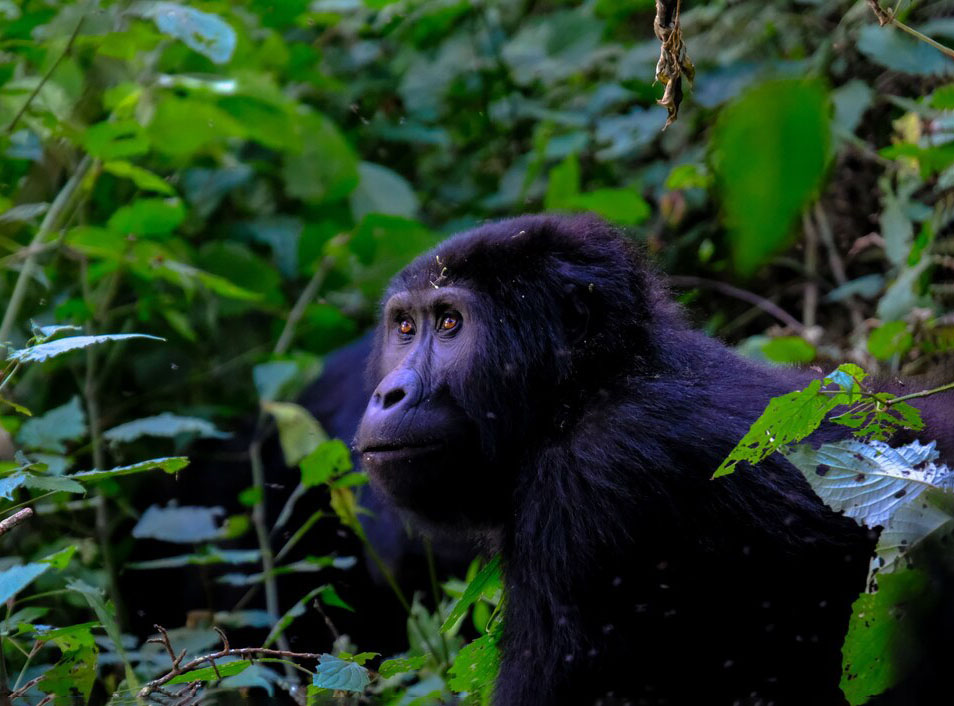
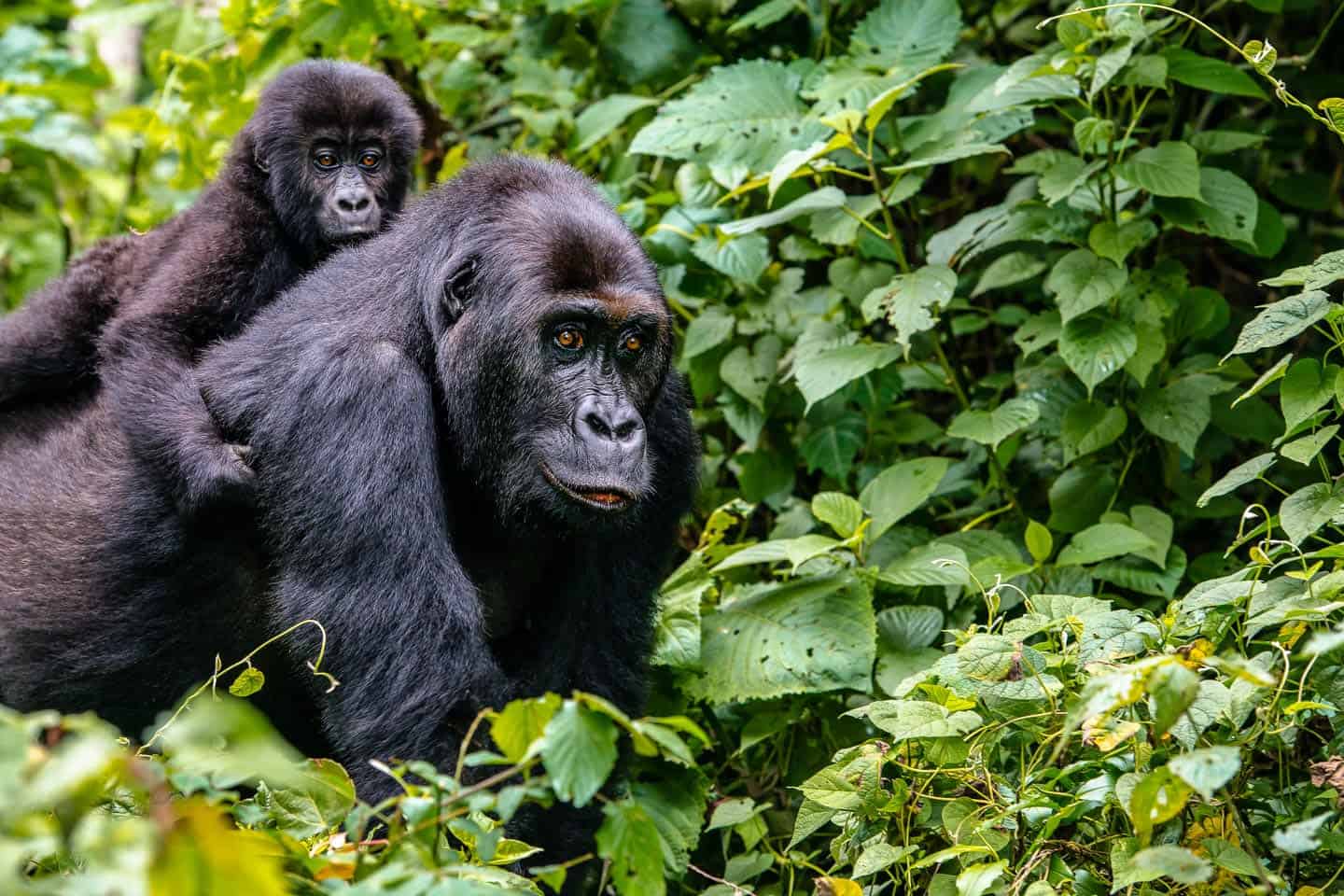
Bwindi is internationally renowned for its population of endangered mountain gorillas. The forest supports a major proportion of the world’s remaining mountain gorillas and has become one of the most important destinations anywhere in Africa for responsible gorilla tourism.
Gorilla trekking takes visitors deep into the forest accompanied by experienced Uganda Wildlife Authority guides and trackers. The journey may involve climbing steep slopes, crossing streams and moving through thick vegetation before reaching a habituated gorilla family.
The physical challenge of the trek is part of the experience. Once a gorilla family is located, visitors are given a carefully managed period to observe the animals as they feed, rest, groom one another and move through their natural forest habitat.
Bwindi’s gorilla tourism is organised around four principal trekking sectors: Buhoma, Ruhija, Rushaga and Nkuringo. Each sector has its own landscape, accommodation options and trekking routes, so visitors should arrange their accommodation according to the sector indicated on their gorilla permit.
The latest published Uganda Wildlife Authority state-of-wildlife report still cites the 2018 estimate of approximately 459 mountain gorillas in Bwindi, while noting that a newer census was completed and its updated gorilla population estimate was still under analysis at the time of publication.
Gorilla Trekking
Gorilla trekking is the signature experience in Bwindi Impenetrable National Park. Treks normally begin early in the morning with a briefing from Uganda Wildlife Authority guides before visitors are assigned to groups and enter the forest.
The duration of the trek varies considerably depending on the location of the gorillas, terrain and weather conditions. Some encounters may require only a few hours, while others can involve a longer and more demanding hike.
Once the gorillas are located, visitors experience one of Africa’s most intimate wildlife encounters, watching mountain gorillas at close range while respecting strict conservation and health guidelines.
Permits are limited and should be reserved well in advance, particularly during Uganda’s popular travel seasons.
Gorilla Habituation Experience
Bwindi also offers the Gorilla Habituation Experience, a more specialised activity designed for visitors who want additional time observing gorillas that are undergoing the gradual habituation process.
Participants accompany researchers, trackers and conservation teams into the forest and spend substantially more time around the gorillas than during an ordinary trekking experience. The activity provides an opportunity to gain a deeper understanding of gorilla behaviour, research and long-term conservation.
Because availability is highly restricted, advance booking is essential.
An Ancient Forest
Bwindi is far more than a gorilla sanctuary. Its ancient forest contains an extraordinary mixture of lowland and montane vegetation shaped by dramatic changes in altitude.
Walking through the park reveals towering trees, tangled vines, ferns, moss-covered branches, bamboo and dense undergrowth. Mist frequently settles over the forested ridges, creating the atmospheric scenery for which Bwindi has become famous.
The forest supports hundreds of plant species and represents an important refuge for species associated with the Albertine Rift and the wider Guineo-Congolian ecological region.
Primates and Forest Wildlife
Bwindi supports an exceptional primate community. In addition to mountain gorillas, visitors may encounter black-and-white colobus monkeys, blue monkeys, red-tailed monkeys and other forest primates.
The park is also an important habitat for chimpanzees. A dedicated census released by Uganda Wildlife Authority in February 2026 estimated approximately 426 chimpanzees distributed throughout Bwindi, confirming the park’s importance for the conservation of both of Africa’s great apes.
Other mammals found within the wider forest ecosystem include forest duikers and a variety of smaller, secretive species. Many forest animals are considerably harder to observe than animals in Uganda’s open savannah parks, making every sighting especially rewarding.
Birdwatching in Bwindi
Bwindi is one of Uganda’s premier forest birding destinations. Its position within the Albertine Rift makes it particularly important for specialised birdwatchers searching for regional endemics and forest-dependent species.
The park supports hundreds of bird species, including several Albertine Rift endemics. Possible sightings include colourful turacos, forest robins, flycatchers, sunbirds, barbets, greenbuls and many other species associated with montane forest.
Birding can be especially rewarding around Ruhija, Buhoma and along established forest trails, where experienced guides can help visitors identify calls and locate species that would otherwise be difficult to see.
Nature Walks and Forest Trails
Guided nature walks offer visitors an opportunity to experience Bwindi at a slower pace. Instead of concentrating entirely on gorillas, these walks reveal the forest’s plants, birds, butterflies, monkeys, streams and waterfalls.
Popular routes include trails around Buhoma and other trekking sectors, while longer routes may connect communities or pass through particularly scenic sections of the forest.
The Ivy River Trail is one of the routes associated with the Bwindi landscape, while bamboo and high-altitude walks provide a different perspective on the park’s vegetation and mountain scenery.
Guides interpret medicinal plants, forest ecology, wildlife signs and the relationships between local communities and the protected area.
Butterflies and Smaller Forest Life
Bwindi’s biodiversity extends far beyond mammals and birds. The forest supports hundreds of butterfly species as well as frogs, reptiles, insects and other smaller wildlife.
These species form an essential part of the forest ecosystem and make Bwindi particularly appealing to naturalists, photographers and travellers interested in biodiversity rather than only large animals.
After rainfall, the forest becomes especially vibrant, with butterflies gathering along damp trails and streams while frogs and insects create an extraordinary soundtrack beneath the forest canopy.
Batwa Cultural Experiences
The Batwa have a deep historical connection with the forests of southwestern Uganda. For generations, Batwa communities lived as forest-dependent hunter-gatherers before conservation changes restricted access to areas that later became protected.
Today, carefully managed cultural experiences provide visitors with an opportunity to learn about this history directly from community members.
Activities may include traditional storytelling, demonstrations of historical fire-making techniques, discussions about forest plants and medicinal knowledge, music and dance. These experiences are most meaningful when organised through responsible community-led initiatives that ensure local people benefit directly from tourism.
Bakiga Community Experiences
The agricultural communities surrounding Bwindi, particularly the Bakiga, also offer rewarding cultural experiences.
Visitors may explore village farms, learn about banana, coffee and tea cultivation, observe traditional food preparation and participate in community walks. Some experiences include craft making, local cooking, banana beverage production, music and dance.
Community tourism provides an important complement to gorilla trekking because it introduces travellers to the people whose homes and livelihoods surround one of Africa’s most celebrated conservation areas.
Buhoma Community Village Walk
Buhoma, on the northern side of Bwindi, has developed one of the park’s best-known community tourism programmes.
Village walks can introduce visitors to local craftspeople, farmers, community projects, traditional knowledge and cultural performances. These activities also provide opportunities to purchase locally produced crafts and support enterprises operating around the park.
A community walk is particularly suitable after a morning gorilla trek or for visitors spending more than one night in the Buhoma area.
Ruhija, Rushaga and Nkuringo Communities
The communities around Ruhija, Rushaga and Nkuringo offer equally interesting experiences and are particularly convenient for visitors staying in the eastern and southern parts of Bwindi.
Depending on the programme, activities can include guided village walks, cooking experiences, coffee preparation, farming demonstrations, craft workshops and storytelling.
These quieter cultural encounters allow travellers to experience daily life around Bwindi while creating additional income opportunities beyond gorilla tourism.
More Than a Gorilla Destination
Gorilla trekking may be the experience that brings most travellers to Bwindi, but the park’s deeper appeal lies in the complete combination of wildlife, ancient forest, mountain scenery, birdlife and community culture.
A multi-night stay allows visitors to trek gorillas without rushing, explore the forest, spend time with neighbouring communities and appreciate the extraordinary ecosystem surrounding them.
Bwindi is not simply a place to see mountain gorillas. It is one of Uganda’s defining wilderness destinations, a living rainforest where conservation, biodiversity and human history meet
Main Attractions
01
Mountain Gorillas – Bwindi’s greatest attraction and one of the world's most extraordinary wildlife encounters. The forest protects almost half of the remaining mountain gorilla population.
02
Buhoma Sector – Bwindi’s historic northern trekking sector, offering gorilla trekking, forest walks, community experiences and access to a range of safari accommodation.
03
Ruhija Sector – Located on the eastern side of the forest, Ruhija is known for gorilla trekking, birdwatching and its beautiful highland forest environment.
04
Rushaga Sector – A southern Bwindi sector offering gorilla trekking and the Gorilla Habituation Experience, together with access to surrounding community and cultural experiences.
05
Nkuringo Sector – A scenic southern sector known for dramatic mountain landscapes, gorilla trekking and forest experiences.
06
Ancient Impenetrable Forest – Bwindi’s dense vegetation, steep ridges, valleys and mist-covered forest create one of Uganda’s most distinctive natural environments.
07
Albertine Rift Biodiversity – The park protects exceptional biodiversity, including numerous species that are endemic or strongly associated with the Albertine Rift.
08
Forest Primates – Bwindi supports several primate species, including black-and-white colobus monkeys, blue monkeys and red-tailed monkeys.
09
Albertine Rift Birdlife – More than 300 bird species occur in the forest, including rare species and Albertine Rift endemics that make Bwindi an important birdwatching destination.
10
Butterfly Diversity – The forest supports an exceptional variety of butterflies, including species found within the Albertine Rift.
11
Forest Flora – Bwindi contains remarkable plant diversity, with ancient forest habitats supporting hundreds of tree and flowering plant species.
12
Community and Cultural Experiences – Villages around Buhoma, Ruhija, Nkuringo and Rushaga offer opportunities to learn about Batwa and Bakiga traditions, livelihoods, crafts, food and cultural heritage.
Things To Do
01
Gorilla Trekking – Trek through the forest with trained guides and trackers in search of a habituated mountain gorilla family, followed by a designated period observing the gorillas.
02
Gorilla Habituation Experience – Spend an extended period with a gorilla group undergoing habituation while learning about gorilla behaviour, research and conservation.
03
Birdwatching – Explore Bwindi’s forest habitats in search of rare forest birds and Albertine Rift endemics.
04
Guided Forest Walks – Discover the forest on foot while learning about its plants, wildlife, ecology and conservation.
05
Primate Watching – Look for black-and-white colobus monkeys, blue monkeys, red-tailed monkeys and other forest primates.
06
Nature Photography – Photograph Bwindi’s dramatic landscapes, forest vegetation, birds, butterflies, primates and other wildlife.
07
Buhoma Community Village Walk – Experience village life through visits to local artisans, traditional healers, schools and cultural performances.
08
Batwa Cultural Experience – Learn about the history and traditional forest knowledge of the Batwa people through guided community experiences, storytelling and demonstrations.
09
Bakiga Community Experiences – Discover local farming traditions, food preparation, coffee and banana production, music and other aspects of rural life.
10
Coffee and Agricultural Experiences – Visit local communities to learn about coffee cultivation, farming practices and the importance of agriculture to surrounding households.
11
Traditional Music, Dance and Storytelling – Experience local performances and learn about cultural traditions preserved within communities around the forest.
12
Craft and Community Visits – Support local artisans by visiting community craft shops and purchasing locally made products.
 white-water rafting & adventure safari