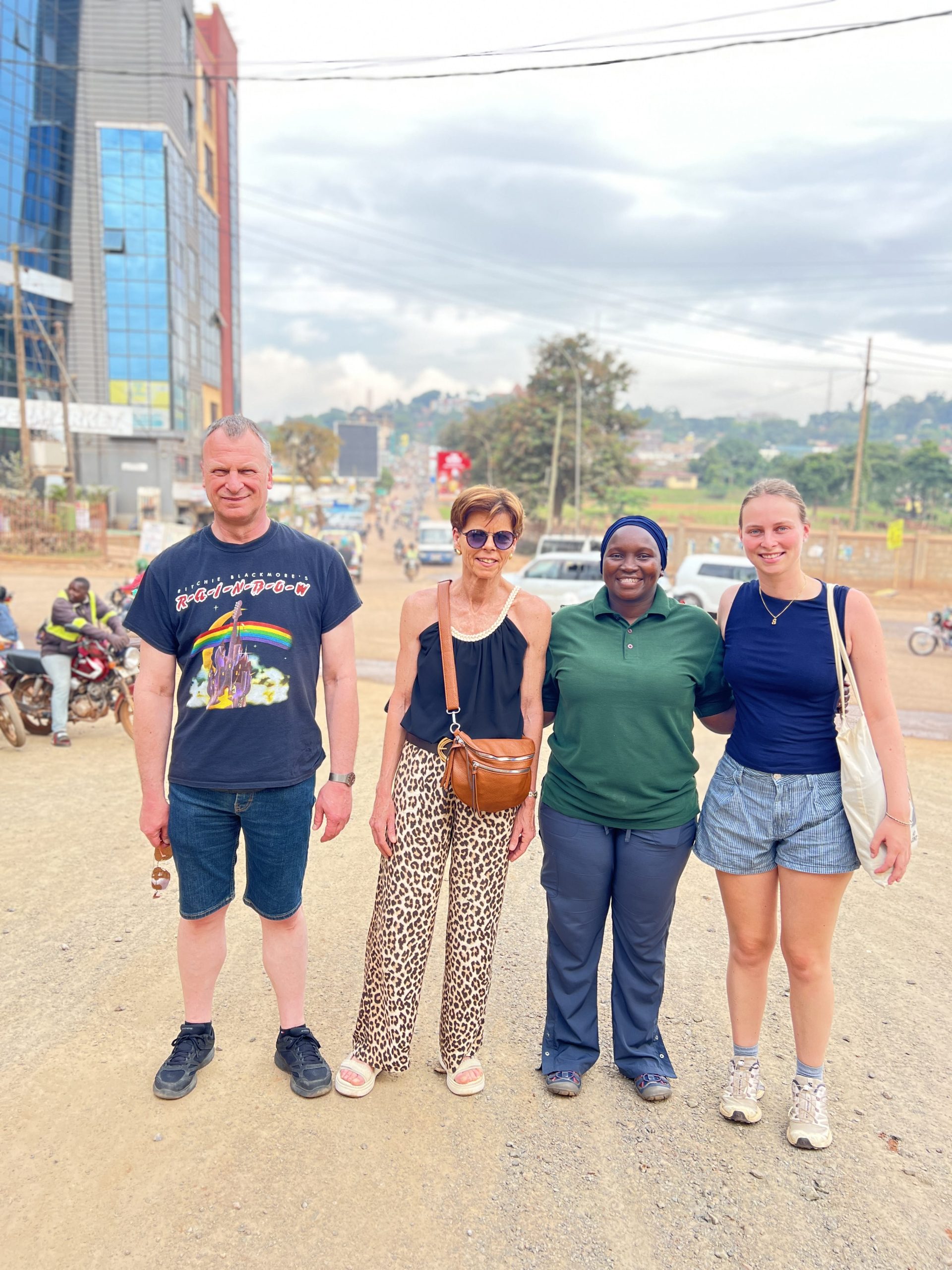
Discover the history, culture and everyday life of Uganda’s capital on a three-hour Kampala City Walking Tour led by a professional female guide. This experience introduces you to Kampala through its historical landmarks, traditional institutions, religious sites, bustling markets, public transport culture and local craft businesses.
Kampala is a lively city where Uganda’s past and present meet. As you walk through its streets, your guide will introduce you to the stories behind important landmarks and explain how the city’s cultural traditions, commercial activity and diverse communities shape daily life.
Beginning at Gaddafi National Mosque and ending at African Village Craft Market on Buganda Road, the tour combines sightseeing, cultural learning, market exploration and opportunities to interact with Kampala’s vibrant urban environment.
Detailed Itinerary
Stop 1: Gaddafi National Mosque Meeting Point
Your tour begins at Gaddafi National Mosque, where your professional female guide will meet you outside the main gate wearing the company uniform for easy identification. After a brief introduction and overview of the three-hour walking tour, you will begin exploring Kampala’s history from one of its notable landmarks.
The mosque is an important religious and historical site in the city. Your guide will introduce you to its place in Kampala’s development and explain how the city grew into Uganda’s capital.
Visitors are required to pay the mosque’s entrance fee at the tourism office. The visit includes a guided tour of the mosque and, as described in the original itinerary, an opportunity to climb the minaret for views across Kampala’s hills and landmarks.
From the top, your guide will point out places that feature later in the walking tour and explain their historical and cultural significance. Visitors should follow the mosque’s dress requirements and guidance on appropriate conduct. Photography is permitted according to the tour information provided.
Stop 2: Kabaka’s Palace Mengo
From the mosque, continue on foot to Kabaka’s Palace in Mengo, approximately a 15-minute walk according to the original itinerary.
The palace offers an introduction to the history of the Buganda Kingdom and its relationship with Uganda’s national history. Your guide will explain the traditions of the kingdom and the role of its kings before and after Uganda’s independence.
A site guide will take you through the palace grounds and explain the history associated with the location. The tour also includes a visit to the former torture chambers, which are connected to the country’s troubled political history and the palace’s use as a military barracks following the events of 1966.
Visitors are required to pay the palace entrance fee. The original tour notes that visitors may be provided with a wrap to help meet the site’s traditional dress expectations. Follow the instructions given by the palace staff and guides during your visit.
Stop 3: Owino Market
Continue into the busy commercial heart of Kampala with a visit to Owino Market, one of the city’s well-known trading centres.
The market sells a wide range of goods, including fresh food, vegetables, second-hand clothing and shoes. It offers a close look at the everyday shopping and trading activities that support many Kampala residents.
As you walk through the market with your guide, observe the movement of traders and customers, the variety of merchandise and the lively atmosphere. The market can feel crowded and confusing for first-time visitors, making it an interesting introduction to the energy of urban life in Kampala.
Keep your belongings secure and follow your guide through the market.
Stop 4: Kampala Fabrics Market
Your next stop is the fabrics market, where you can discover colourful textiles, including kitenge fabrics used in clothing and other locally made items.
The market is a useful stop for visitors interested in Uganda’s fabrics and shopping culture. If you would like to purchase material to take home or use for tailoring, your guide can help you navigate the market.
The original tour information notes that the fabrics market aims to offer the same prices to local and international customers. Prices and availability may vary by seller, so check the details before making a purchase.
Stop 5: Old Taxi Park
Visit the Old Taxi Park to learn about the public transport system that connects Kampala with communities around the city and beyond.
Here, you will see public taxis operating from a busy transport hub. Your guide will explain how passengers identify taxis travelling to their destinations and how this transport system supports everyday movement around Uganda.
The Old Taxi Park is often described as an example of Kampala’s “organised chaos,” reflecting the constant movement of vehicles, passengers and traders. From a suitable viewing point, you can observe the activity and take photographs where appropriate.
This stop provides insight into how residents travel, work and navigate the city.
Stop 6: Hindu Temple
Continue to a Hindu temple to learn about Hinduism and the religious diversity found in Uganda.
Your guide will discuss the history of Indian communities in Uganda, their arrival in the country, their expulsion during Idi Amin’s rule and the return of many members of the community during the 1980s after his downfall.
Uganda is home to several religious traditions, including Christianity, Islam, Hinduism, the Bahá’í Faith and traditional beliefs. This stop offers an opportunity to understand how different religious communities form part of the country’s cultural landscape.
Visitors should respect the temple’s rules, dress expectations and any instructions provided by the people responsible for the site.
Stop 7: Nakasero Market
Walk to Nakasero Market, another important destination for understanding Kampala’s food trade and everyday shopping culture.
The market sells food, vegetables and other fresh produce. Visitors interested in trying local fruits or purchasing spices can explore the available products with assistance from their guide.
This stop provides an opportunity to see the range of ingredients used in Ugandan homes and to learn more about the role local markets play in supplying the city.
If you wish to purchase anything, ask about the price before buying and follow your guide’s advice when navigating the market.
Stop 8: Gorilla Monument
Continue towards the city centre to see the Gorilla Monument, which celebrates Uganda’s wildlife heritage and the importance of gorilla conservation.
The monument commemorates Ruhondeza, known as the “Gentle Giant,” who became associated with gorilla tourism in Bwindi Impenetrable National Park. Your guide will explain the significance of the monument and introduce the wider importance of protecting Uganda’s natural heritage.
This stop connects Kampala’s urban history with the wildlife experiences for which Uganda is widely known.
Stop 9: Independence Monument
Visit the Independence Monument in the heart of Kampala to learn about Uganda’s journey towards independence.
Your guide will explain the historical significance of the monument and discuss changes in the country before and after independence. You will also learn about the symbolism of Uganda’s national flag and the Grey Crowned Crane, the country’s national bird.
The monument provides an opportunity to reflect on national identity, history and the events that shaped modern Uganda.
Stop 10: World War Monument
Continue to the World War Monument at City Square, below the Supreme Court building.
The monument commemorates Ugandan soldiers who fought on behalf of Britain during the First and Second World Wars. Your guide will explain the monument’s purpose and its place among Kampala’s historical landmarks.
This stop adds another dimension to the city’s history by connecting Uganda with wider events that took place during the twentieth century.
Stop 11: African Village Craft Market. End Point
Your walking tour concludes at African Village Craft Market along Buganda Road.
The market has numerous stalls selling handmade crafts and souvenirs that visitors can browse before leaving the tour. According to the original itinerary, many stalls are owned by women, and the market provides an opportunity to support women involved in craft businesses.
You can explore different stalls, look for gifts to take home and practise respectful bargaining, which is a familiar part of local shopping culture.
Your guide will conclude the guided portion of the experience here, leaving you free to continue shopping or explore the surrounding area independently.
A Meaningful Introduction to Kampala
The 3 Hours Kampala City Walking Tour is an opportunity to see the city beyond its roads and buildings. Through historical monuments, cultural institutions, markets and religious sites, you will gain an introduction to the traditions and everyday experiences that shape Uganda’s capital.
Led by a professional female guide, the tour offers a local perspective on Kampala’s history, its diverse communities and its lively commercial streets, ending with time to explore handmade crafts at African Village Craft Market.