Ngorongoro Conservation Area is one of Tanzania’s most extraordinary travel destinations, bringing together spectacular volcanic landscapes, abundant wildlife, ancient human history and living cultural traditions. Located in northern Tanzania, this remarkable protected area is a highlight of the Northern Safari Circuit and an unforgettable destination for wildlife lovers, photographers, nature enthusiasts and cultural travellers.
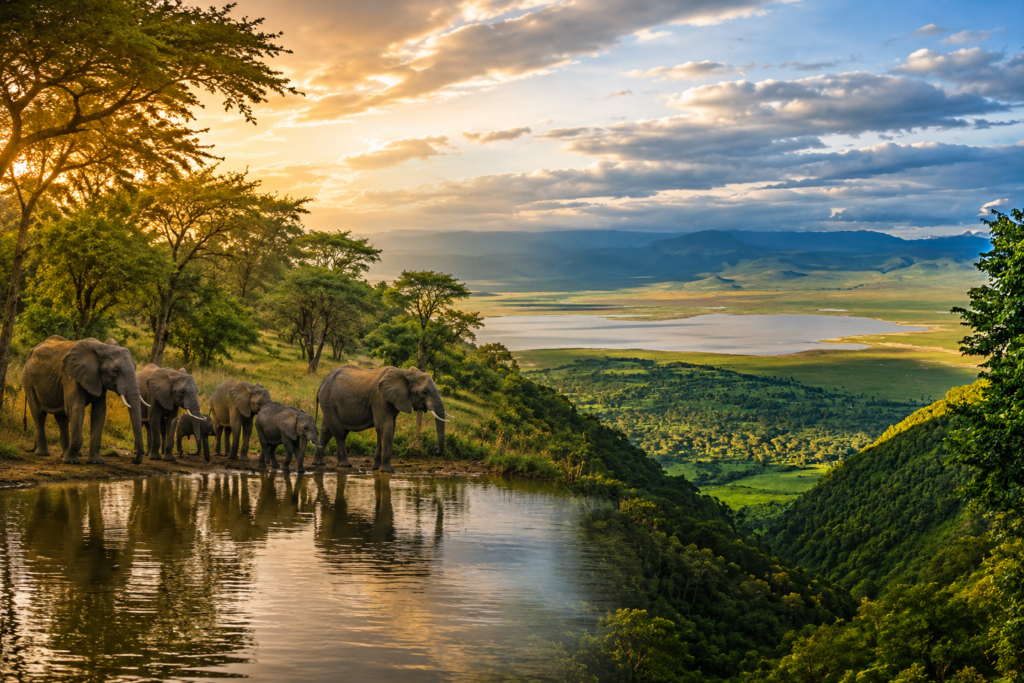
The conservation area is best known for the magnificent Ngorongoro Crater, a vast volcanic caldera surrounded by steep walls and highland scenery. Its grasslands, freshwater pools, woodland and wetlands provide habitat for numerous animal species, including lions, elephants, buffaloes, zebras, wildebeest, hyenas and the endangered black rhinoceros.
Beyond the crater, Ngorongoro offers a much larger landscape of highland forests, open plains, volcanic mountains, archaeological sites and seasonal wildlife movements. Visitors can explore the scenic Empakaai and Olmoti craters, discover the ancient discoveries of Olduvai Gorge, learn about early human footprints at Laetoli and experience aspects of Maasai pastoral culture.
Ngorongoro is not simply a wildlife destination. It is a place where natural heritage, geological history, human evolution and the relationship between people and the environment come together. The area was established in 1959 as a multiple-land-use conservation area and is recognised as a UNESCO World Heritage property for its outstanding natural and cultural importance.
Ngorongoro Crater: A Natural Wildlife Sanctuary
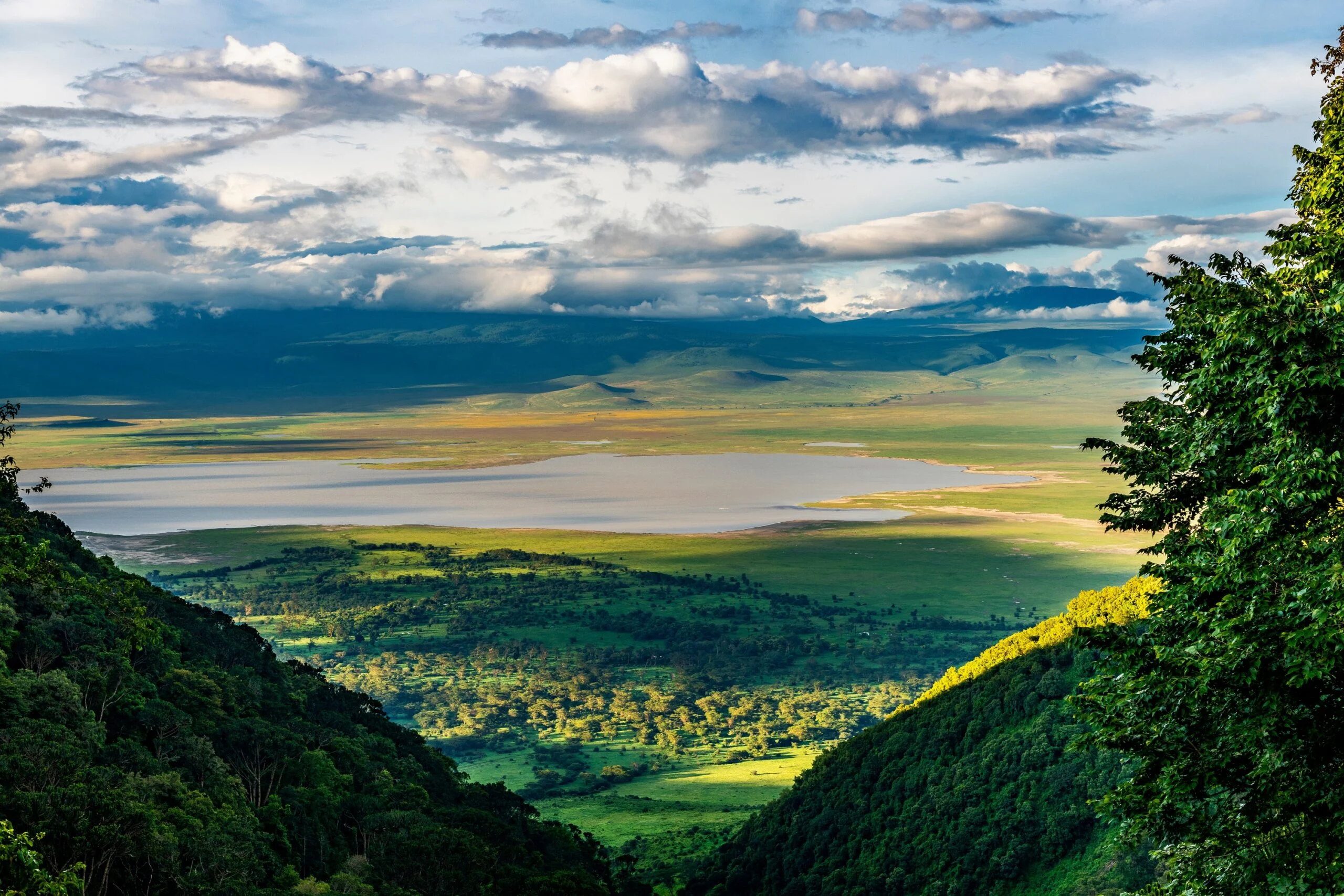
Ngorongoro Crater is the conservation area’s most famous attraction and one of Africa’s most remarkable natural landscapes. Formed when a large volcanic structure collapsed inward, the crater is an enormous, enclosed caldera with steep forested walls and a broad floor of grassland, wetlands and woodland.
The crater floor supports a high concentration of wildlife, making it one of Tanzania’s most rewarding locations for a game drive. Visitors may encounter zebras and wildebeest grazing across open plains, buffaloes feeding near marshes, hippos resting in pools and lions moving through the grassland.
The endangered black rhinoceros is among the area’s most important wildlife species. Sightings are never guaranteed, but Ngorongoro is one of the notable destinations in Tanzania where visitors may have an opportunity to see this rare animal in the wild.
The changing scenery adds to the experience. Mist may settle over the crater rim in the early morning, while sunlight later illuminates the grasslands and brings out the colours of the crater floor.
The Big Five and Exceptional Wildlife Viewing
Ngorongoro is a major destination for travellers hoping to see Africa’s Big Five: lion, leopard, elephant, buffalo and rhinoceros.
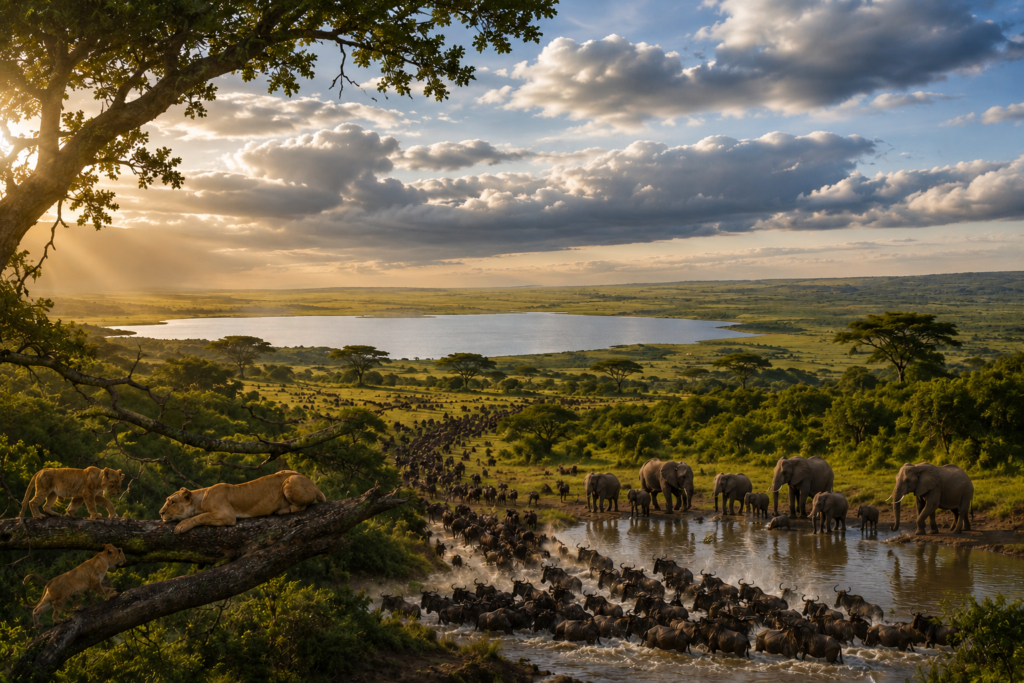
Lions are frequently sought after during crater game drives, while buffaloes and elephants can often be found in suitable feeding and watering areas. Leopards are more elusive, and black rhinoceros sightings depend on location and conditions.
Other animals include spotted hyenas, jackals, hippos, zebras, wildebeest, elands, gazelles, warthogs and numerous smaller mammals. The combination of open grasslands and varied habitats creates opportunities to observe feeding, resting, hunting and social behaviour.
Wildlife sightings vary from day to day. An experienced guide can help interpret animal tracks, understand habitat preferences and locate areas where wildlife may be active.
Lake Magadi and the Crater’s Wetlands
Lake Magadi is a shallow, alkaline lake on the floor of Ngorongoro Crater. Depending on water levels and seasonal conditions, it can attract flamingos and other waterbirds, creating beautiful photographic scenes against the surrounding grasslands and crater walls.
Wetlands and freshwater pools elsewhere on the crater floor are important for hippos and other wildlife. These habitats also support birds and provide drinking water for animals moving through the crater.
The lake’s appearance changes with rainfall, evaporation and the season. Even when large numbers of flamingos are absent, the lake remains a striking feature of the crater landscape.
Empakaai Crater: Scenic Hiking and a Volcanic Lake
Empakaai Crater offers a quieter experience for visitors interested in walking, scenery and the geological history of the Ngorongoro highlands.
Its steep crater walls descend towards a lake that may attract flamingos and other waterbirds when conditions are suitable. Forested slopes, highland vegetation and expansive views make this area especially appealing to nature lovers and photographers.
A guided walk into the crater can provide an opportunity to appreciate the landscape at a slower pace, observe plants and birds, and learn about the area’s volcanic origins.
Walking arrangements, access and required ranger support must be confirmed with the Ngorongoro Conservation Area Authority before visiting.
Olmoti Crater and the Munge Waterfall
Olmoti Crater is another scenic volcanic feature in the conservation area. Its green highland landscape, grass-covered crater and surrounding vegetation offer a contrast to the open plains and wildlife-rich crater floor.
Guided walks around Olmoti can reveal highland plants, birds and beautiful views across the surrounding landscape. The Munge Waterfall, associated with the drainage from the crater, is a notable natural feature.
This experience is especially suitable for travellers who enjoy nature walks and wish to explore more than the standard vehicle safari. Access is subject to local regulations, approved routes and the required guiding arrangements.
Olduvai Gorge: A Window into Human Evolution
Olduvai Gorge is one of the world’s most important archaeological and palaeoanthropological sites. Located within the wider Ngorongoro Conservation Area, this dramatic ravine has produced important fossil and archaeological evidence that helps scientists understand human evolution and the lives of early hominins.
Research at Olduvai has revealed fossils, stone tools and remains from different periods of human prehistory. The work of Louis and Mary Leakey helped bring the site to international attention and contributed greatly to scientific understanding of early human ancestors.
Visitors can learn about the discoveries through designated interpretive facilities and museum exhibits, subject to current opening arrangements. The exposed geological layers also reveal a long history of environmental change, volcanic activity and ancient landscapes.
Olduvai Gorge adds a powerful historical dimension to a safari, allowing travellers to explore a place that is significant not only for wildlife but also for humanity’s past.
Laetoli Footprints: Traces of Ancient Life
Laetoli is internationally recognised for fossilised hominin footprints dating to approximately 3.6 million years ago. These footprints preserve evidence of ancient upright walking and are among the most significant discoveries in the study of human evolution.
The site forms part of the wider archaeological landscape associated with Ngorongoro. Access to the footprints themselves may be restricted to protect this fragile heritage, so visitors should check which interpretive experiences or authorised visits are available.
For travellers interested in archaeology, anthropology and science, Laetoli provides a fascinating connection to the distant past and complements a visit to Olduvai Gorge.
Maasai Culture and Pastoral Traditions
The Ngorongoro Conservation Area is also associated with Maasai communities whose pastoral traditions form an important part of the region’s cultural landscape.
Maasai culture is often recognised for its distinctive clothing, beadwork, livestock traditions, songs, dances and community identity. Livestock, especially cattle, have historically played a significant role in social life and livelihoods.
Depending on local arrangements, visitors may have opportunities to learn about traditional practices, crafts and aspects of daily life through organised cultural experiences. These visits should be arranged respectfully, with community participation and permission.
The conservation area has a complex history of land use, conservation and community rights. A responsible visit should recognise local people as more than a tourist attraction and appreciate the importance of their livelihoods, perspectives and cultural heritage.
The Ngorongoro Highlands and Highland Forests
The wider conservation area includes cool highland environments, montane forests, open moorlands and expansive grasslands. These landscapes differ greatly from the warmer, more open conditions on the crater floor.
Forest habitats provide shelter and food for birds, monkeys and other wildlife. Highland vegetation also plays an important role in the area’s water systems, helping sustain streams, wetlands and downstream ecosystems.
The scenery is particularly attractive to travellers who enjoy changing landscapes, scenic drives and photography. Misty ridges, forested slopes and rolling grasslands can create a memorable contrast with the wildlife-rich plains below.
Ndutu Plains and Seasonal Wildlife Migration
The Ndutu Plains, in the southern part of the wider Serengeti ecosystem, are known for their seasonal wildlife movements and connection to the Great Migration.
During the green season, large numbers of wildebeest and zebras move through the broader region, with many wildebeest calves born on the southern plains. The abundance of grazing animals can attract predators, including lions, cheetahs and hyenas.
Wildlife movements depend on rainfall and grazing conditions, so the timing and location of sightings vary from year to year. Travellers interested in migration photography should plan their safari around the seasonal patterns and obtain current guidance from experienced local operators.
Ndutu is an important addition for visitors who want to explore beyond the crater and experience the wider ecological connections between Ngorongoro and Serengeti.
Birdwatching and Nature Photography
Ngorongoro’s variety of habitats makes it a rewarding destination for birdwatchers. Open plains, wetlands, lakes, woodland and montane forests support a wide range of bird species.
Depending on the location and season, visitors may see flamingos, ostriches, secretarybirds, eagles, vultures, storks, herons, hornbills and numerous smaller birds.
Photographers can capture wildlife against the dramatic crater walls, flamingos on alkaline waters, elephants in woodland and expansive views across the highlands. Early mornings often offer atmospheric light and cooler conditions, while changing cloud cover can create striking landscape photographs.
Binoculars, a camera with a suitable zoom lens and a field guide can make the experience more rewarding.
Walking Safaris and Guided Nature Walks
Walking experiences offer a different perspective on Ngorongoro’s landscapes. Instead of observing everything from a vehicle, visitors can focus on plants, insects, birds, animal tracks, geology and the details of the natural environment.
Approved walks may be available in designated areas such as the highlands and around selected craters. Routes differ in length, difficulty and scenery.
The Ngorongoro Conservation Area Authority requires walking activities to be arranged in accordance with its rules, including the use of an armed ranger where required. Visitors should not leave authorised routes or attempt independent walks in wildlife areas.
Suitable footwear, layered clothing, drinking water and protection from sun or rain are recommended.
Conservation and Responsible Tourism
Ngorongoro Conservation Area protects an internationally important combination of wildlife habitats, volcanic landscapes, archaeological sites and cultural heritage.
Conservation depends on protecting wildlife populations, maintaining connected habitats, managing tourism responsibly and safeguarding archaeological features. The wider Serengeti ecosystem’s wildlife movements also depend on landscapes beyond individual protected-area boundaries.
Visitors can contribute by following their guide’s instructions, remaining on designated roads, keeping a safe distance from animals, avoiding littering and respecting cultural protocols. Archaeological and fossil sites should never be disturbed or have objects removed.
Cultural visits should be arranged with appropriate permission, and photography of people should always be respectful and consensual. These practices help protect the area’s natural and cultural values for future generations.
Why Visit Ngorongoro Conservation Area with Local Female Guides?
Ngorongoro is an exceptional destination for travellers who want to experience Tanzania’s wildlife, dramatic scenery and cultural heritage in one journey.
Local Female Guides can help visitors plan a safari around their interests, preferred accommodation, travel dates and budget. Whether you are hoping to see the Big Five, photograph the crater, explore ancient archaeological sites or combine Ngorongoro with other northern Tanzania destinations, a well-planned itinerary can help you make the most of your visit.
The conservation area offers much more than a single crater game drive. Its volcanic highlands, seasonal migration areas, archaeological heritage and living cultural landscapes make it one of East Africa’s most distinctive destinations.
Discover Ngorongoro with an itinerary that values wildlife, respects local communities and gives you time to appreciate the remarkable natural history of northern Tanzania.
Main Attractions
01
Ngorongoro Crater: A spectacular volcanic caldera with a high concentration of wildlife and dramatic crater walls.
02
Big Five Wildlife: Opportunities to search for lions, elephants, buffaloes, leopards and the endangered black rhinoceros.
03
Lake Magadi: An alkaline lake on the crater floor that can attract flamingos and other waterbirds.
04
Empakaai Crater: A scenic volcanic crater with a lake, highland vegetation and guided walking opportunities.
05
Olmoti Crater: A beautiful highland crater known for its landscapes, guided walks and nearby Munge Waterfall.
06
Olduvai Gorge: A globally important archaeological site associated with major discoveries about human evolution.
07
Laetoli Footprints: Ancient hominin footprints dating to approximately 3.6 million years ago.
08
Ndutu Plains: Seasonal wildlife viewing areas associated with wildebeest calving and the wider Great Migration.
09
Ngorongoro Crater Rim: Elevated viewpoints and forested scenery overlooking the crater floor.
10
Northern Highland Forests: Montane forest habitats that support birds, plants and other wildlife.
11
Munge Waterfall: A natural feature associated with Olmoti Crater and its drainage.
12
Maasai Cultural Heritage: Opportunities to learn about local pastoral traditions through respectful, authorised cultural visits.
13
Seasonal Grasslands: Open plains that support grazing wildlife and changing seasonal scenery.
14
Highland Landscapes: Rolling grasslands, volcanic hills and misty ridges across the conservation area.
15
Archaeological Heritage Sites: Additional sites across the wider area that contribute to its significance for human history.
Things To Do
01
Crater Game Drives: Explore the Ngorongoro Crater floor in a safari vehicle with a professional guide.
02
Big Five Wildlife Viewing: Search for the area's iconic large mammals.
03
Wildlife Photography: Photograph mammals, birds and dramatic volcanic landscapes.
04
Birdwatching: Observe birds across grasslands, wetlands, lakes and forest habitats.
05
Empakaai Crater Walks: Explore authorised routes with the required guide or ranger arrangements.
06
Olmoti Crater Walks: Discover highland scenery and learn about the area's natural features.
07
Olduvai Gorge Visits: Learn about archaeological discoveries and early human history.
08
Archaeological Interpretation: Explore approved heritage experiences related to human evolution and prehistoric landscapes.
09
Laetoli Heritage Experiences: Learn about the ancient footprints through currently authorised visitor arrangements.
10
Seasonal Migration Safaris: Explore the Ndutu region and wider ecosystem at suitable times of the year.
11
Maasai Cultural Visits: Experience community-led cultural activities when available and appropriately arranged.
12
Landscape Photography: Capture the crater rim, highlands, volcanic terrain and open plains.
13
Guided Nature Walks: Discover plants, birds, geology and other natural features along approved routes.
14
Scenic Drives: Travel through the conservation area's highlands and varied landscapes.
15
Multi-Destination Safaris: Combine Ngorongoro with Tarangire, Lake Manyara and Serengeti.
16
Walking routes, cultural visits and archaeological access are subject to permission, availability and NCAA regulations. Confirm spe
 big five wildlife safari